53-year-old retail chain explores selling entire business
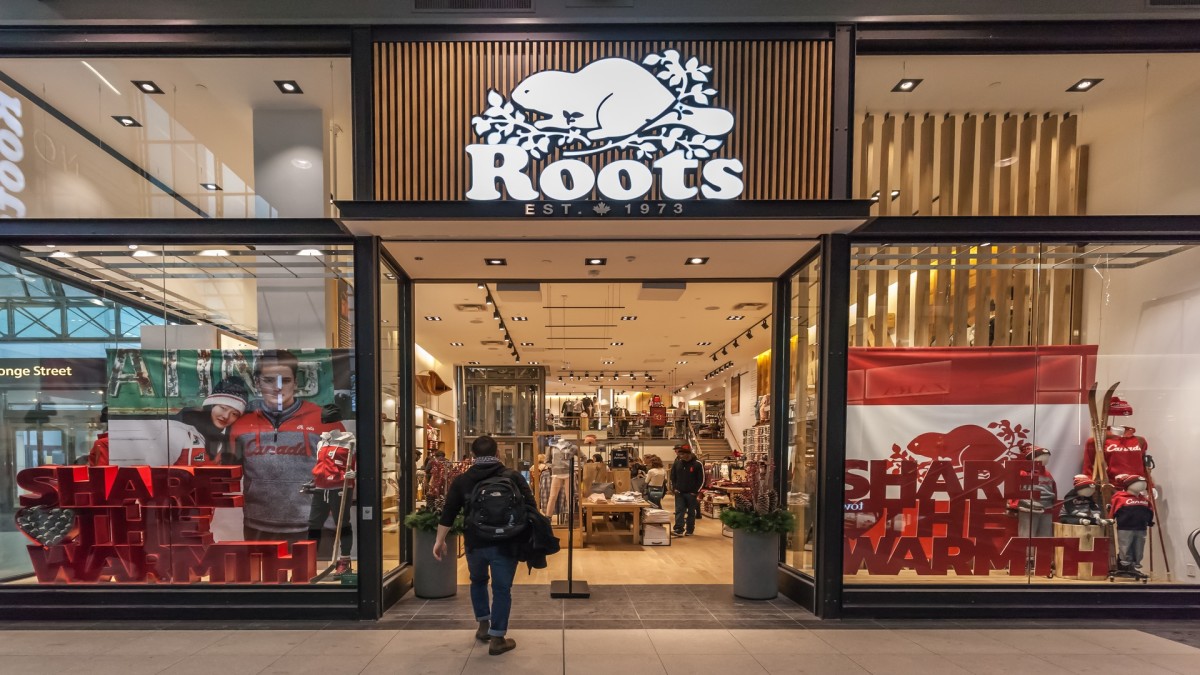
Seeing liquidation sales and store-closing signs at once-iconic mall anchors has become a familiar sight across North America, slowly taking away shopping options in many communities and signaling continued challenges across the retail sector.
Major department store chains such as Macy's (M), JCPenney (JCP), and Kohl's (KSS) have shuttered locations amid shifting consumer demand, higher operational costs, and intensifying competition.
Now, another legacy retailer is evaluating its future.
After navigating a U.S. bankruptcy restructuring, closing underperforming stores, and working to restore profitability, a Canadian outdoor apparel brand could potentially be selling its entire business after more than five decades.
Roots explores a potential sale
Roots Corporation (RROTF) confirmed in a recent press release that it has initiated a formal review of strategic alternatives to maximize shareholder value, including a potential sale of the company.
The review is part of a broader value-maximization strategy, and the company will continue executing its current business plan during the process. Roots stated it does not intend to provide further updates unless and until a specific transaction is approved or disclosure becomes legally required. There's also no guarantee that a deal will occur.
The move follows the company's appointment of Rosie Pouzar as Chief Commercial Officer in February 2026. Roots CEO Meghan Roach said the leadership addition intends to sharpen enterprise priorities, accelerate decision-making, and unlock new growth opportunities, according to a company press release.
Roots went public in October 2017 at $12 per share but has struggled to consistently meet profitability expectations since its IPO. While the company has generated free cash flow in multiple periods, margins have remained under pressure.
TD Cowen analyst Brian Morrison said in a note that a potential transaction could value the company's shares between $4 and $4.5 based on valuation multiples of comparable retailers, as reported by Bloomberg.
Strategic review processes are often initiated when companies seek to unlock shareholder value, respond to market changes, reduce financial risk, gain access to capital, or pursue ownership structures better suited for long-term growth.
Roots U.S. Chapter 7 bankruptcy and restructuring
Roots filed for Chapter 7 bankruptcy protection in the U.S. in 2020 amid financial challenges resulting from the COVID-19 pandemic. At the time, the company reported approximately $9.6 million in assets and $15.4 million in liabilities tied to its U.S. operations.
The filing led to the liquidation and closure of nearly all its U.S. stores, leaving just two physical locations nationwide. However, Roots maintained its e-commerce platform to preserve market distribution without expanding its brick-and-mortar footprint.
More Store Closures:
- 153-year-old bookstore chain confirms more closures in 2026
- Aritzia brings back iconic fashion brand after shutdown
- 159-year-old retail giant announces more store closures
- The Giant Company acquires stores as owner exits market
Today, the company operates around 100 stores in Canada, two in the U.S., and over 100 partner-operated locations in Asia. It also has an e-commerce platform that delivers to more than 70 countries worldwide.
Roots' multi-year turnaround strategy shows progress, but profitability remains shaky
During a June 2025 earnings call, Roots unveiled a multi-year turnaround plan focused on in-store customer engagement, strengthening digital merchandising, optimizing inventory availability, and enhancing omnichannel capabilities to boost sales and get its business back on track.
As part of this strategy, the company has closed underperforming locations to allocate capital toward stores with stronger long-term profitability potential.
Roots said the strategy had begun showing early signs of progress.
In the first quarter of fiscal 2025, sales increased nearly 7% year over year. However, the company still reported a net loss of almost $8 million CAD ($5.87 million USD).
By the third quarter of fiscal 2025, sales rose 6.8% to $71.5 million CAD ($52.43 million USD). Net income totaled $2.3 million ($1.69 million USD), down 4.5% from the prior year, signaling slower earnings growth despite higher sales.
Roots CFO Leon Wu said in the earnings report that investments in strategic growth strategies continue to deliver results.
"We have sustained positive sales momentum and maintained the underlying margins of those sales, supporting a stronger balance sheet with year-over-year reductions in net debt," Wu said.
Roots' shares fell 4.1% on March 2 before rebounding 5.6% on March 4 following news of the strategic review. The company's market capitalization stands at approximately $118.03 million CAD ($86.34 million USD), with a high debt-to-equity ratio and limited liquidity reflecting ongoing financial strain, according to MarketBeat.
What this means for investors
A potential sale of the business could provide new opportunities, including access to new capital. However, if no deal is made, the company's ability to expand margins and reduce debt will likely determine long-term shareholder returns.
Related: Apple closes all stores in fast-growing market