Palantir faces a ‘quiet shockwave’ from a small deal with big optics
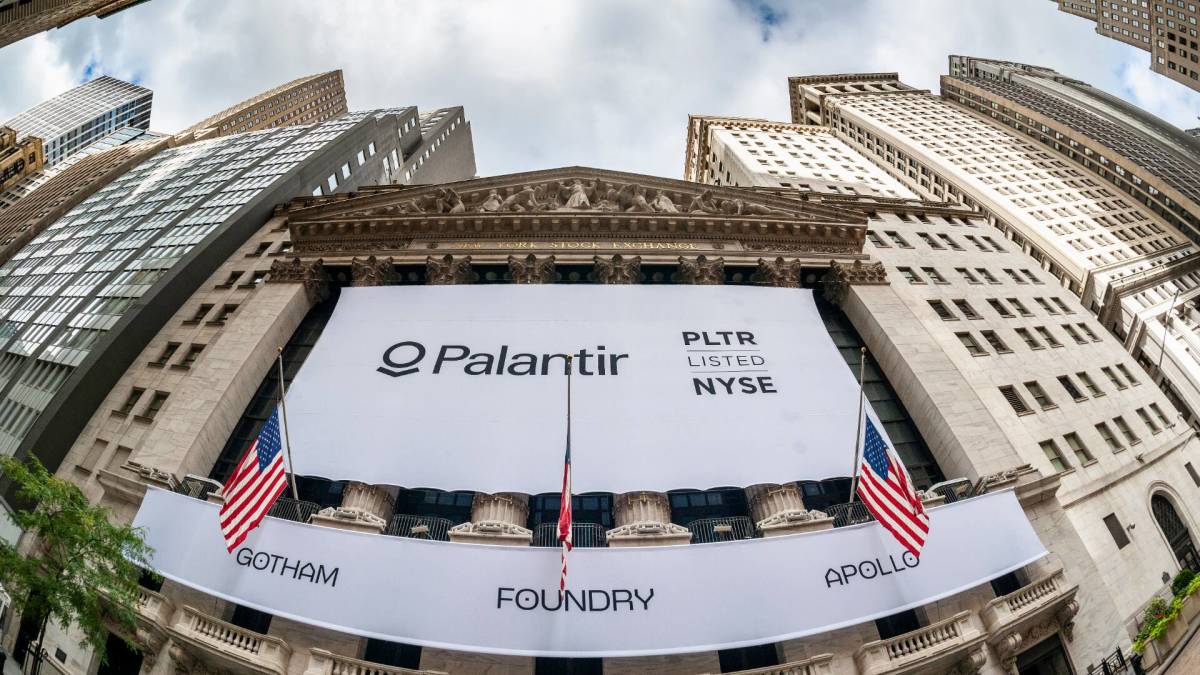
Palantir (PLTR) is having the kind of year that most data analytics companies can only dream about. The AI-focused company's financial statistics are incredibly strong, strapped, in effect, to a rocket ship. Still, headlines find a way to complicate the trade.
Shares have recently changed hands for about $131, which is down approximately 3% from the prior close, according to the latest market print. It's a stark reminder that even after a massive multi-year run, PLTR can swing violently, depending on the circumstances.
Now the stock has a new overhang. New York City’s public hospital system has paid Palantir nearly $4 million since 2023 for revenue-cycle optimization and efficiency, The Intercept reports.
The problem? Activists are urging NYC to eliminate ties with Palantir.
That dollar amount is immaterial when considering a tech giant of Palantir’s size. For investors, however, the policy decision matters.
Why? Because the policy decision sits at the intersection of three factors that significantly impact the value of PLTR: regulated data, public-sector optics, and trust.
What the Palantir-NYC contract fight is really about
Palantir's work with New York City’s public hospital system reportedly involves one of the least glamorous but most important aspects of health care: billing.
The tech giant's tools are expected to help NYC Health + Hospitalscapture charges, reduce denials, and improve collections, including scanning patient notes to locate and isolate any missed billing elements.
The work is simple and straightforward. I don't think the handling of medical records, by itself, presents any issues. The main controversy, therefore, is who is handling this data, given Palantir's reputation due to its work with U.S. Immigration and Customs Enforcement (ICE).
More Palantir
- Palantir CEO delivers curt 8-word message to investors
- Palantir drops immigration enforcement bombshell
- Popular analyst reveals 9 ‘buy the dip’ tech stocks
Palantir's critics believe its past involvement with the U.S. government and immigration makes it a poor fit for public hospital network. Complicating matters further is the contract language that lets Palantir operate with protected health information and remove identifying information for some applications.
Before coming at Palantir with an ax, we need to understand the nature of the contract. NYC Health + Hospitals said the relationship was only about optimizing the revenue cycle, without using or sharing hospital data outside the contract’s bounds.
Why Palantir investors should care (even if $4 million is a rounding error)
For PLTR shareholders, the market risk is not revenue; it's friction.
Health care is a high-value market for software vendors, but despite its growth, it is essential to understand that health care data is the most important and sensitive data on earth.
Related: Apple’s Siri shocker is flashing a warning AAPL bulls can’t ignore
When a vendor like Palantir becomes a headline, access to this sensitive data begins to slow down.
- Committees add more layers of review.
- Legal teams want stricter rules.
- Renewals become more difficult and technical.
- Competitors get a chance just by being "less controversial."
For Palantir, this task becomes doubly difficult due to the stock price. With a market cap of around $433 billion, Palantir's price essentially rests on belief, positioning it as a category leader.
What does that mean? Essentially, investors are paying for Palantir's ability to bypass regulations or satisfy regulatory requirements to secure contracts that will lead to continued value.
The numbers that keep bulls in PLTR
Palantir’s latest earnings release with the SEC is a classic example of why investors keep piling into PLTR, despite the NYC noise.
Despite all of the headline risk, the core growth engine is still ripping. That engine is why Palantir can continue to justify the excellent multiples it commands.
Related: Veteran analyst drops a shocker on Cisco
In Q4 2025, Palantir reported the following.
- Revenue of $1.407 billion, up 70% from the previous year: It's the "proof point" that demand isn't just hype.
- U.S. commercial revenue of $507 million, up 137%: This is the single most important bull case because it supports the main idea: Palantir wants to be an enterprise platform, not just a government contractor.
- GAAP operating income of $575 million (41% margin): The market is signaling that growth is arriving with real operating leverage, not endless spending.
- Adjusted free cash flow of $791 million (56% margin): It offers evidence that PLTR isn't just growing, but also making money, which is why investors are willing to tolerate the controversy.
- Full-year 2025 revenue rising56% to $4.475 billion: The number reinforces a major theme — the business is growing so quickly that small contracts don't change the direction of its finances.
The forward-looking line took the lead for PLTR in 2026, providing bulls with a clear "scale" argument to counter critics who doubt the company's ability to grow in regulated markets.
- 2026 revenue guidance of $7.182 billion to $7.198 billion: A step-change that means Palantir thinks the momentum will continue, not fade.
- U.S. commercial revenue guidance of more than $3.144 billion (at least 115% growth): For me, it is a clear data point. If Palantir continues to grow rapidly, it can absorb any reputational hits. There will need to be substantial evidence to show that reputational losses can lead to operational losses as well.
That isn't "normal" growth, but the kind that gets you high multiples. It can also become weak if controversy turns into procurement friction and slows down the commercial flywheel.
Palantir valuation reality check
Let's clarify the situation by presenting the trade-off in a single snapshot: Palantir’s P/E is roughly 395, based on the latest market data.
To me, that represents screams from the markets: “Keep executing and don’t trip.”
So look at it this way: When a small contract, such as the NYC one, comes along, the question investors will ask isn’t “How much revenue is this?”
Instead, it’s: "Does this create drag in the next 10 contracts, the one we are already pricing in?"
This isn’t just a New York problem
Palantir’s health-care expansion also faces scrutiny as it expands overseas.
Reporting in the U.K. is bringing to light ongoing debate about Palantir's role in the National Health Service's data infrastructure, in another example of how reputation can be a risk for delivery and adoption in public health systems.
That's the kind of thing PLTR investors should look for: a push into health care that makes money and is politically unstable.
What could move PLTR next
If you hold Palantir or you want to trade PLTR, here is what you need to know.
- Renewal/non-renewal optics in NYC: The contract size is small. However, the headline impact can be large if certain members of the political class, particularly in NYC, make it a flashpoint.
- Copycat scrutiny: One controversy is noise, and PLTR stockholders can avoid it. But when there are many problems in a lot of public contracts, it becomes a pattern. Patterns slow down sales, dragging on PLTR stock.
- Management messaging around regulated markets: Bulls want solid evidence that Palantir can keep scaling its business repeatedly without getting bogged down in trust and oversight battles, which can be costly and cumbersome.
The bottom line is that I do not believe the NYC contract will lead to any major issues for Palantir’s income statement.
But it can change how much different investors are willing to pay, and since PLTR is priced for excellence, headline risk is never "just noise."
Related: Trump adviser drops bombshell on Meta, Microsoft