Middle East chaos continues to drain your pocketbook
Maybe the war in the Middle East will end soon. But it's become very costly and getting costlier by the day at home and (obviously) in the combat zone.
Crude oil prices were higher in early trading on March 19. So were prices at the gas pump, both in the United States and elsewhere. Prices of gasoline futures were up.
And all these moves are weighing on stocks going into the day's trading. They're weighing on bonds. They're weighing on mortgage rates.
Oil bills are growing
Gasoline prices have risen steadily since the end of February. The gain is now a bit more than 30%, according to AAA data, which showed the U.S. average at $3.884 a gallon. The gain for the year is nearly 37%.
Crude oil prices were higher early on Thursday, March 19. Light sweet crude, the benchmark U.S. oil, gained about 1% to reach $97.26 a barrel. Brent, the global benchmark, jumped 9.5% to a staggering $117.54 a barrel. (Yes, you read that right.)
The odds are Brent will hit $120 a barrel, the highest level since the summer of 2022.
The price of light sweet crude is up 69% this year. Brent is up 93%.
Pay attention to Iran's South Pars gas field
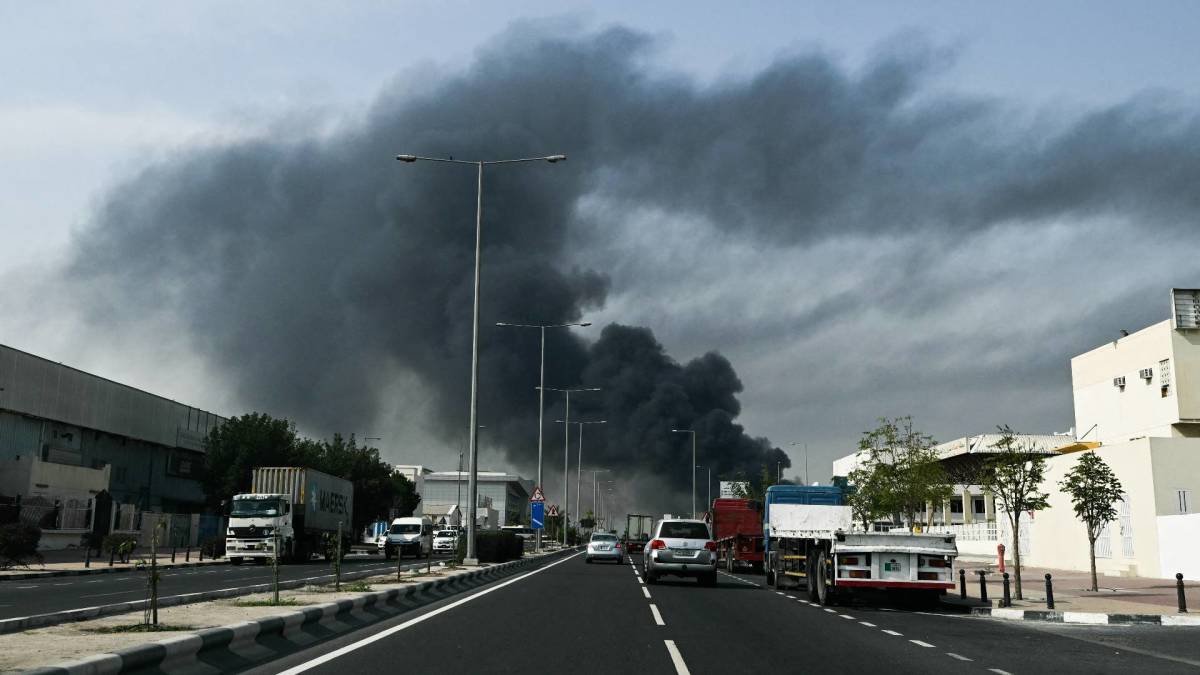
The catalyst for these latest price increases was Israel's attack this week on Iran's South Pars gas field in the Persian Gulf and Iran's response: to attack Qatar's Ras Laffan industrial area, causing fires and extensive damage.
Here I offer a quick explainer.
- Qatar is involved because it owns the North Dome natural gas field in the Persian Gulf.
- That field adjoins Iran's South Pars field.
- The two fields combined represent the largest natural gas field in the world, according to the International Energy Agency.
Mahmud Hams/Getty Images
And Qatar is the world's largest exporter of liquified natural gas, which is processed in the Ras Laffan industrial area. Except that it can't ship any of the gas because the Strait of Hormuz, at the eastern end of the Persian Gulf, is effectively shut.
The result? Wholesale LNG prices in Europe were up as much as 25% on March 19, the BBC reported. China and India are deeply concerned, since they were the biggest buyers of Qatar's gas in 2025.
In other words, the stakes are now getting high. For everyone.
So high that President Donald Trump declared late Wednesday, March 18, that Israel wouldn't attack South Pars again. Still, he promised to blow up the entirety of South Pars if Qatari gas is attacked again.
So high that Iran published a list of energy sites in the Persian Gulf it might target, and Saudi Aramco, the state-owned oil company, began evacuating several facilities.
The global markets are rattled
Japan's Nikkei 225 Index fell nearly 1,900 points, or 3.4%, to 53,373. Germany's Dax Index is down 2.3%. at 22,962. Britain's FTSE 100 Index is off 2% at 10,114. India's Sensex Index is off 3.3% at 74,207.
The U.S. stock market doesn't open until 9:30 a.m. EST, with index futures suggesting modest declines.
More Oil and Gas:
- Gloom, Yes. Panic? That Could Be Around the Corner.
- The War Is Expanding, the Fed Is Clueless, and the Market Is Cracking
- Morgan Stanley has a stark warning for oil investors
But U.S. stocks slumped badly on March 18, as much because the Federal Reserve didn't cut its key federal funds rate at its March meeting.
And, as Spencer Jakab at The Wall Street Journal noted, "Central banks can create money out of thin air, but they can’t make oil."
The S&P 500 Index is down 3.7% so far in March. The Dow Jones industrials have fallen 5.6%, and the Nasdaq Composite has dropped 2.3%.
Here are four key points about U.S. markets.
- Gold and silver prices were off March 18 and off more in overnight trading. Gold was off 2% at $4,797. It's down early 15% from its January high. Silver was off 6.8% to $72 an ounce and is now down nearly 41% since peaking at $121.785 in January. Rising oil prices are sucking the momentum away from metals.
- U.S. energy stocks were mixed on March 18.
- All of the Magnificent 7 stocks — Apple, Amazon, Google parent Alphabet, Meta Platforms, Microsoft, Nvidia and Tesla — are down for the year. All are down at least 10% from their 52-week highs.
- All of the major averages are down so far in 2026.
Related: Bank of America resets Nvidia stock forecast after meeting with CFO