Trump’s $2.2T proposed defense budget boosts Lockheed Martin’s outlook
Lockheed Martin’s (LMT) outlook is getting a boost from Washington.
President Donald Trump’s proposed $2.2 trillion defense budget eases one of the biggest concerns around Lockheed Martin's forward guidance.
At the same time, missile demand is building, and the company is expanding capacity to meet it, but the key question is whether that momentum translates into stronger earnings over the next few years.
Proposed 2027 budget eases F-35 downside risk
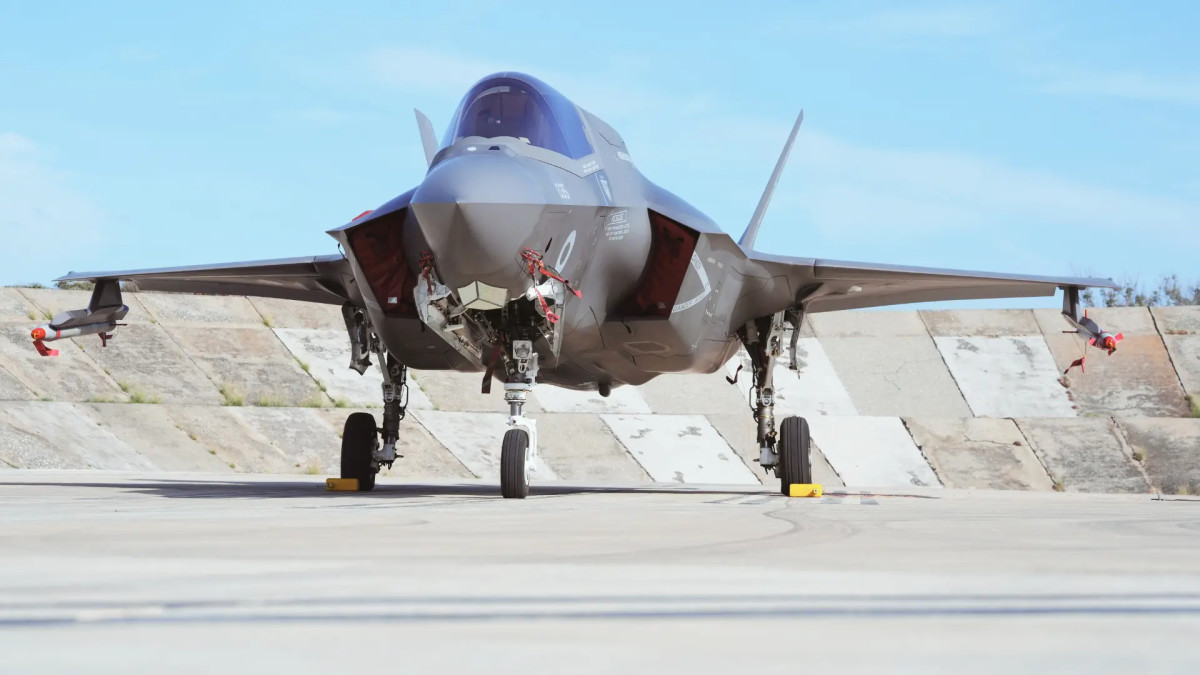
The most important change in Lockheed’s outlook is coming from Washington. In the Trump administration’s FY2027 defense proposal, the Pentagon backed procurement of 85 new F-35 aircraft as part of a broader $1.5 trillion defense budget framework.
Right now, the central bear case for Lockheed Martin is that cost pressures and program scrutiny would force a meaningful pullback in F-35 purchases. Instead, the proposal signals continued support for the company’s largest franchise at a time when Lockheed already has a record$194 billion backlog.
White House budget director Russell Vought said in a message: “The 2027 Budget... would ensure that the United States continues to maintain the world’s most powerful and capable military.”
More Trending Stocks:
- UBS has a message for Palantir investors
- Wall Street sees 70% upside for this beaten-down AI stock
- Wall Street resets Amazon stock price targets on AWS AI trends
The immediate impact is more stable F-35 revenue and a lower risk of negative estimate revisions. If U.S. procurement stays near that 85-aircraft level, Lockheed will likely maintain stability in the program that supports its backlog quality.
That also reduces the risk that the 2026 revenue guidance of $77.5 billion to $80.0 billion will face a fighter-related shortfall. The next question is whether appropriators keep support close enough to the proposal to sustain bookings and backlog through the FY2027 cycle.
If that holds, the risk of a near-term reset in Lockheed’s largest program looks far less likely. The focus then shifts away from program stability and toward execution.
Missile ramp-up adds a second growth pillar
Missiles are emerging as a credible source of upside for Lockheed Martin.
Management has outlined a major expansion of PAC-3 MSE production, with annual capacity set to rise from 620 units to 2,000 under long-duration framework agreements tied to missile-defense demand. This buildout starts from a position of strength, with MFC sales already up 14% in FY2025.
Replenishment demand for interceptors and air-defense systems has become more durable across U.S. and allied budgets, giving Lockheed a growth lane that does not depend on higher fighter output.
If PAC-3 MSE and related programs such as THAAD convert framework agreements into sustained production, missiles can help to shift the company’s earnings mix toward programs tied to active replenishment cycles rather than long-debated aircraft procurement.
This would provide a second profit engine and reduce reliance on any single U.S. platform decision.
The key questions now come down to execution and timing. Can the increased PAC-3 MSE production convert into booked revenue, double-digit MFC growth, and operating leverage? Until that shows up in results, the missile story remains promising but unproven.
What could drive LMT higher
- FY2027 support for 85 F-35s would preserve production visibility and reinforce backlog-backed revenue durability.
- A successful PAC-3 MSE ramp would convert missile-defense demand into higher MFC volume and a larger earnings contribution from a faster-growing segment.
- THAAD and allied interceptor orders would broaden missile demand and reduce dependence on fighter procurement for growth.
- Better margin execution across segments would turn 2026 revenue stability into cleaner normalized EPS growth.
- Lockheed’s record backlog would continue to support delivery flow and limit the risk of a revenue air pocket.
What could pressure LMT shares
- A cut to F-35 procurement below the Pentagon proposal would reduce bookings visibility and revive the core bear case.
- Execution problems in the PAC-3 MSE ramp would delay revenue conversion and weaken the argument that missiles can become a true second growth engine.
- If framework missile agreements do not turn into firm production orders, the demand story will not translate into earnings.
- The bigger valuation risk is that 2026 EPS proves mostly charge-related, leaving normalized earnings power below headline expectations.
- If margin improvement stalls, stable sales alone may not be enough to support upside in the stock.
Key takeaways for Lockheed Martin
Lockheed’s setup is improving, with F-35 demand looking more stable and missile growth emerging as a second driver.
The focus now shifts to execution. Investors need to see whether capacity expansion, margin improvement, and backlog conversion can translate into stronger, more durable earnings. If that happens, the stock has a clearer path higher.
Related: CoreWeave stock gets bold call from Bank of America amid AI shortage