The next defense tech boom is already here
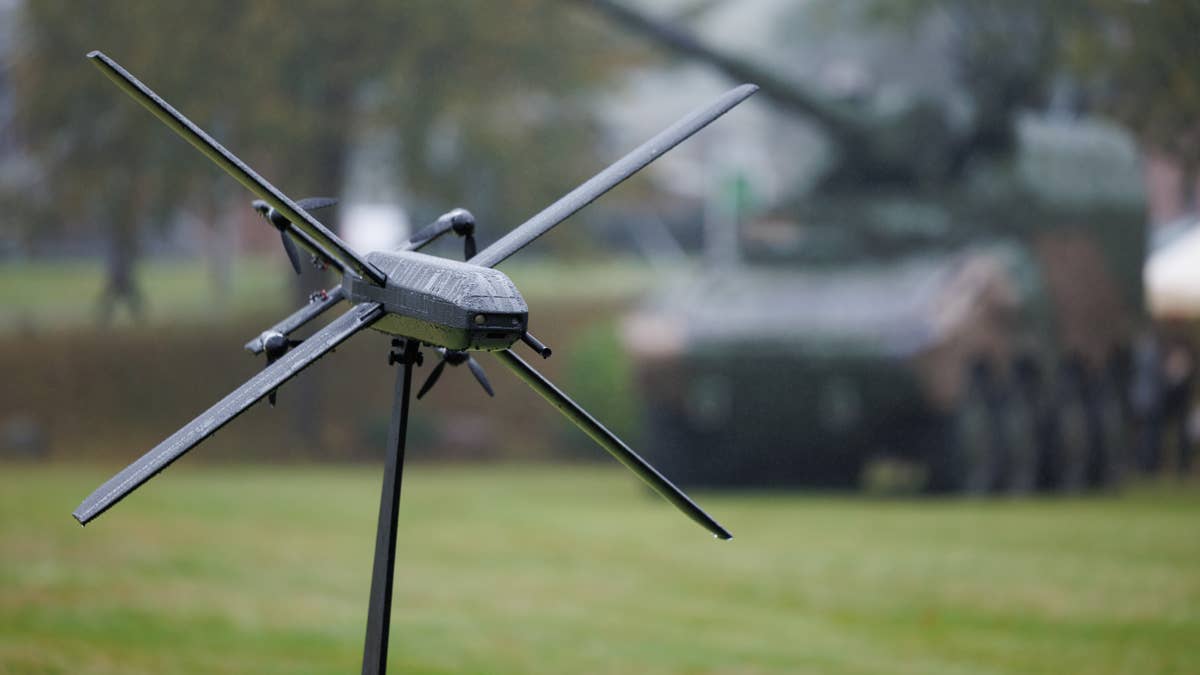
The next arms race is not playing out in submarines or stealth jets. It is happening in the sky above your local stadium. And the weapons at the center of it cost less than a used car.
Drones have moved from a military curiosity to a mainstream security threat faster than governments could write rules to stop them. Now the rules are coming. And the money is following.
For investors who have been watching the defense sector through the lens of legacy contractors and slow procurement cycles, something important just changed.
A rare policy alignment investors should not ignore
In February, something unusual happened. Within a single 24-hour window, both the United States and the European Union advanced major counter-drone initiatives.
On February 11, the European Commission published its Action Plan on Drone and Counter-Drone Security. It is a coordinated strategy spanning all EU member states. The plan calls for scaled-up counter-drone production, an EU Drone Alliance with Ukraine, joint member state procurement, and a new EU Counter-Drone Centre of Excellence, according to DroneLife.
The following day, Rep. Eric Burlison introduced the Defender Act in Congress. The bill would authorize up to 4,000 law enforcement agencies nationwide to detect and neutralize hostile drones. A separate expedited program would cover 40 agencies in the 11 U.S. host cities for the 2026 FIFA World Cup.
More Tech Stocks:
- Morgan Stanley sets jaw-dropping Micron price target after event
- Nvidia’s China chip problem isn’t what most investors think
- Quantum Computing makes $110 million move nobody saw coming
Near-simultaneous policy movement across two major economies is rare. Defense markets tend to follow policy. And policy is now pointing unmistakably toward counter-drone systems as a priority.
Zohar Halachmi, Chairman and CEO of D-Fend Solutions, told TheStreet that the policy convergence reflects something deeper than regulatory activity. "It indicates a significant alignment in how major global regions view the evolving drone environment. While the specific policy structures may differ, the underlying momentum is the same: the recognition that protecting a modern, drone-integrated society requires a more sophisticated approach than what was previously available."
There's big money behind anti-drone tech already
The policy is backed by serious capital. The Trump administration launched a $500 million initiative on counter-drone technology ahead of the World Cup.
The Federal Emergency Management Agency (FEMA) followed with $250 million in grants to the 11 World Cup host states. It was the fastest non-disaster grant award in the agency's history, the Department of Homeland Security (DHS) confirmed.
DHS also launched a new dedicated office to advance drone and counter-drone technologies. The signal is clear: this is no longer a niche budget line. It is a national security priority with real appropriations behind it.
Europe is moving just as decisively. The commercial airborne drone market alone is forecast to reach €14.5 billion by 2030 and potentially exceed €50 billion by 2033, according to the EU Action Plan. The Commission is calling on member states to pursue joint procurement of counter-drone systems, a structural commitment that signals sustained spending across the bloc for years ahead.
From niche capability to core infrastructure
The drone threat is forcing a fundamental rethink of what critical infrastructure protection even means. Drones are no longer rare or specialized. They are cheap. They are scalable. They are increasingly autonomous. And traditional defenses were not built for them.
The National Football League (NFL) has documented more than 2,000 drone incursions per season for each of the past three years into restricted airspace around its stadiums, according to DroneXL.
Airports, energy facilities, government buildings, and urban centers are all being forced to address airspace security in ways that were simply unnecessary five years ago. Counter-drone systems are becoming foundational infrastructure, not optional add-ons.
Gentsch/Getty Images)
The technology stack is evolving quickly
The next phase of this sector will not be defined by one breakthrough. It will be shaped by the convergence of many. AI is improving detection and tracking. Cyber-based Radio frequency technologies are enabling more precise drone identification. Software-defined systems are allowing faster field updates and adaptability.
At the same time, the industry is moving away from blunt-force responses. Jamming disrupts local communications. Kinetic takedowns risk collateral damage in populated areas. The market is demanding safer, more surgical alternatives.
Halachmi explained that this is changing how local agencies think about deployment, noting that "newer technologies that take control of the drone and land it safely are becoming the preferred choice and often only viable option, as they also allow for the identification and apprehension of those responsible for such rogue activity."
Key figures behind the counter-drone investment surge:
- U.S. bill would authorize up to 4,000 law enforcement agencies nationwide for counter-drone operations, according to Rep. Burlison
- Trump administration launched a $500 million counter-drone initiative ahead of the FIFA World Cup, the DHS confirmed
- FEMA awarded $250 million in counter-drone grants to World Cup host states, the fastest non-disaster grant in agency history, DHS noted
- EU commercial drone market forecast at €14.5 billion by 2030, potentially exceeding €50 billion by 2033, according to the EU Action Plan
- NFL documented more than 2,000 drone incursions per season for three straight years, DroneXL reported
- EU drone "wall" integrated into the Eastern Flank Watch, targeted to be operational by end of 2027, according to Euronews
Why investors are still catching up
Despite the momentum, counter-drone technology remains underrepresented in mainstream investment narratives. The sector sits at the intersection of defense, telecommunications, software, and aviation regulation. That complexity makes it harder to categorize than a traditional defense play.
Defense technology has also historically moved on longer procurement cycles. That has made it less appealing to investors chasing near-term returns. But that dynamic is shifting fast.
Policy alignment, threat urgency, and rapid technological progress are compressing timelines in ways that have not been seen before. A new generation of defense technology companies is emerging: more agile and software-driven than legacy contractors, building modular systems that plug into broader defense architectures. Capital is following.
Halachmi told TheStreet that this globalization is already underway. "Innovative and agile new-generation defense technology companies are increasingly globalizing their operations to ensure they can integrate seamlessly with existing command and control architectures."
The defense tech boom is not a future event. It is unfolding now. For investors, the opportunity is in seeing that clearly before the market does.
Related: Trump's $2.2T proposed defense budget boosts Lockheed Martin's outlook