Fast-growing breakfast chain sees sales jump after menu revamp
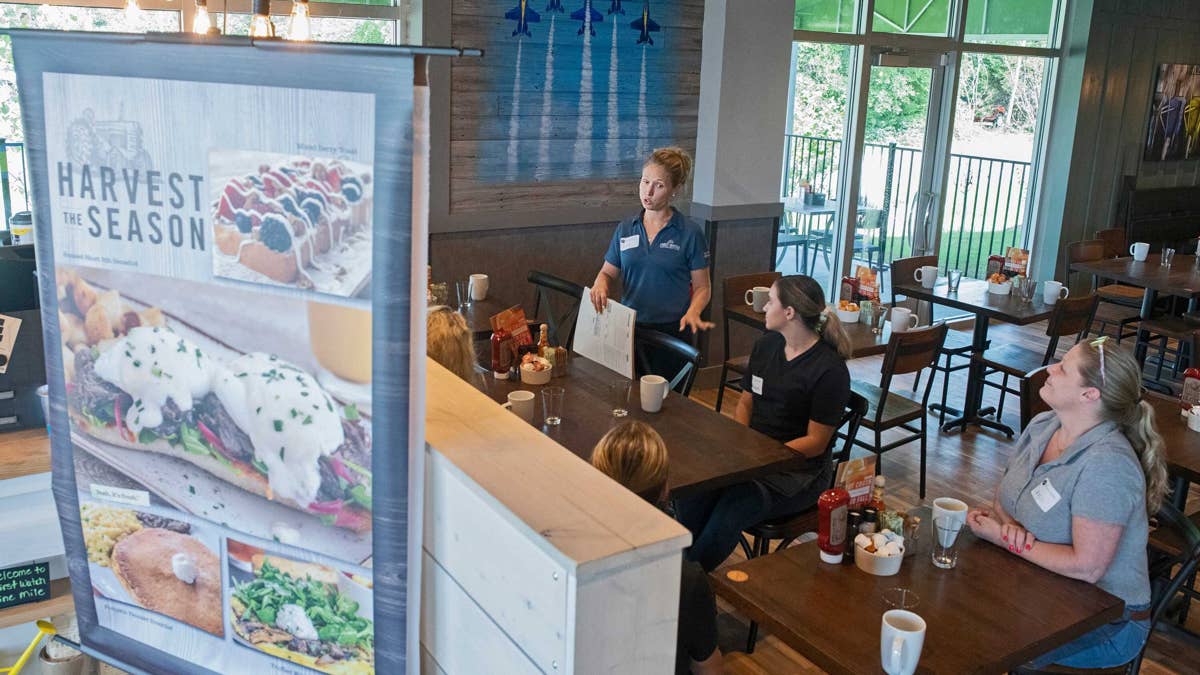
Menu revamps can often draw criticism from loyal customers, especially when beloved items disappear or familiar recipes are adjusted. For many diners, these changes can feel like a brand is drifting away from what made it special in the first place.
In reality, thoughtful menu updates are rarely about abandoning a brand's identity. Instead, they are a strategic effort to preserve it. As consumer preferences evolve, restaurants must redefine their offerings to remain relevant, balancing innovation with core elements that originally built customer loyalty.
That balance has become increasingly important across the restaurant industry as operators face softer consumer spending, rising food costs, and declining traffic. In response, many chains are leaning into premium menu innovations to increase guest spending without relying solely on price hikes.
Throughout 2025, First Watch conducted extensive testing to revamp its menu, aiming to enhance the overall guest experience, simplify kitchen execution, and improve operational efficiency across its restaurants.
Those efforts led the company to its first comprehensive core menu update in more than a decade, which rolled out system-wide by late February 2026.
First Watch launches its 2026 seasonal menu
First Watch (FWRG) introduced its new seasonal menu in January 2026, featuring five food and beverage items, alongside upgrades and the return of its popular fan-favorite B.E.C.
The lineup includes:
- The B.E.C: A bacon, egg, and cheddar cheese sandwich layered with house-pickled sweet peppers, arugula, Calabrian chili aioli, and roasted garlic aioli, on sourdough bread.
- Chimichurri Steak & Eggs Hash: Steak, fresh spinach, cheddar and Monterey Jack cheeses, diced red bell peppers, and roasted onions over a potato hash, topped with two eggs any style, feta cheese, pickled sweet peppers, roasted garlic aioli, and chimichurri sauce.
- Strawberry Tres Leches French Toast: Challah bread topped with glazed strawberries, dulce de leche, whipped cream, and spiced gingerbread cookie crumbles, dusted with powdered cinnamon sugar.
- Blueberry Lemon Cornbread: Cornbread with blueberries, topped with house-whipped lemon butter and cinnamon sugar.
- Pineapple Express: Pineapple, orange, coconut water, lime, and agave, served with a mint crystal rim.
"We wanted this seasonal menu to celebrate the dishes our customers know and love, while also introducing some new flavors into the mix," said First Watch Senior Vice President of Culinary Strategy Shane Schaibly in a statement.
Early new menu results show sales momentum
Initial performance suggests the updated menu is resonating with customers. During the first quarter of 2026:
- Total revenue increased 17.3% year over year
- Same-restaurant sales rose 2.8%
First Watch said during its first-quarter earnings call that the new menu is driving higher average checks, with guests ordering more items and opting for premium selections, improving overall sales mix and per-person spending.
"That dynamic indicates that customers are not only responding well to the updated menu, but also that the new design is encouraging them to explore deeper into our offerings, validating both the strategic intent and the financial discipline behind this important initiative," said First Watch CEO Christopher Tomasso in the earnings call.
The results reflect a broader trend emerging across the restaurant industry. Consumers may be pulling back on discretionary spending overall, but many are still willing to trade up when presented with compelling menu options.
Encouraged by early results, First Watch extended its seasonal menu window from the traditional 10 weeks to 20 weeks, allowing more time to evaluate longer-term performance and marketing impact.
First Watch's strategic approach to menu design
First Watch's menu strategy focuses on both improving customer engagement and profitability.
Key initiatives include:
- Reintroducing popular limited-time offerings to build excitement and strengthen customer loyalty
- Expanding premium options to increase average ticket size and improve menu mix
The company is also preparing to launch its "Million Dollar Bacon" nationwide following final testing, alongside additional items expected to join the core menu in the coming year.
Industry experts say modern restaurant menus do more than simply showcase food offerings. They are increasingly being designed to influence purchasing behavior, highlight high-margin items, and encourage add-on purchases.
"One of the key elements that drive restaurant business growth is creating a menu that goes beyond enticing taste buds and actively drives sales and orders," said the Asian Restaurant and Takeaway Awards (ARTA). "It's a guide for your customers, helping them to decide what to buy instead of just a list of what you sell."
The costly side of menu innovation
Despite the positive sales trends, menu enhancements also come with financial trade-offs.
In the most recent earnings quarter, First Watch reported:
- Food and beverage costs increased 11.5%
- Total operating expenses rising 17.4%
- Net loss totaled $2.7 million
While the company's income from operations margin narrowed to 0.3%, restaurant-level operating profit improved to 18.5%, indicating strong unit-level performance, despite broader cost pressures.
Rising input costs remain a challenge across the restaurant industry. Prices for food away from home increased 3.8% in the 12 months ending March 2026, according to recent data from the U.S. Bureau of Labor Statistics.
Between 2020 and 2025, menu prices at 16 major restaurant chains, including IHOP (DIN), Denny's (DENN), Cracker Barrel (CBRL), and Waffle House, increased by an average of 39%, nearly double the national inflation rate of 22%, according to FinanceBuzz.
More coverage by Fernanda Tronco on menu innovation:
- McDonald's drops 6 new drinks and a surprising fashion collab
- Starbucks shares summer menu with returning favorites, new drinks
- 76-year-old burger chain takes on McDonald’s Happy Meal
At the same time, overall foodservice traffic declined by 1% in the quarter ending June 2025, according to Circana.
Notably, First Watch has not raised menu prices so far in 2026, though executives said they are evaluating whether adjustments may be necessary in the coming weeks.
Operationally, frequent menu updates can also create friction. According to HGEM Empowering Hospitality, restaurants must invest in staff training, update marketing materials, and establish new supply chains whenever menus are refreshed.
Additionally, constant menu changes can frustrate customers who become attached to discontinued items, creating a potential risk to long-term brand loyalty.
First Watch's expansion continues alongside menu evolution
At the same time, First Watch is continuing its rapid expansion.
During the quarter, the company opened 16 new locations and closed one, bringing the total footprint to 648 restaurants, including 572 company-owned and 76 franchise-owned, across 32 states.
For fiscal year 2026, First Watch expects to open 59 to 63 net new restaurants while closing three locations, meaning openings will continue to significantly outpace closures.
According to the company, growth is being driven by a disciplined expansion strategy focused on:
- Strengthening presence in established markets
- Expanding into high-potential new regions
- Increasing operational efficiency through market density
First Watch is also acquiring franchise-operated locations to bring more restaurants under corporate ownership, improving consistency and margins, according to a company announcement.
This expansion strategy builds on a major milestone in 2015, when First Watch acquired The Egg and I Restaurants, adding 144 units and significantly accelerating its national growth, according to a press release.
What menu innovation means for First Watch's future
First Watch's recent performance highlights the broader industry reality that restaurant brands no longer rely on consistency alone to drive growth.
Today, chains are increasingly being forced to evolve their menus strategically to maintain relevance, improve operational efficiency, and encourage higher guest spending in a challenging consumer environment.
For First Watch, the early success of its revamped menu suggests the company may be finding an effective balance between innovation and brand familiarity. However, sustaining that momentum will likely depend on whether the company can continue introducing compelling offerings without alienating loyal customers or putting additional pressure on profitability.
As competition intensifies across the restaurant industry, the brands most likely to succeed may be those that treat menu innovation not as a short-term marketing tactic, but as a long-term business strategy.
Related: McDonald's unveils new Happy Meal in major collab