Warren Buffet’s Berkshire makes major $2.65B move in surging stock
Warren Buffett spent years telling anyone who would listen that airlines were a value trap. He famously said a far-sighted capitalist should have shot down Orville Wright's plane at Kitty Hawk. And then he sold every airline stock he owned during the pandemic, worth north of $4 billion, at a loss.
“It turned out I was wrong,” the Oracle of Omaha later said, adding that he’d made an “understandable mistake” given the unforeseen loss in the industry, according to Yale School of Management.
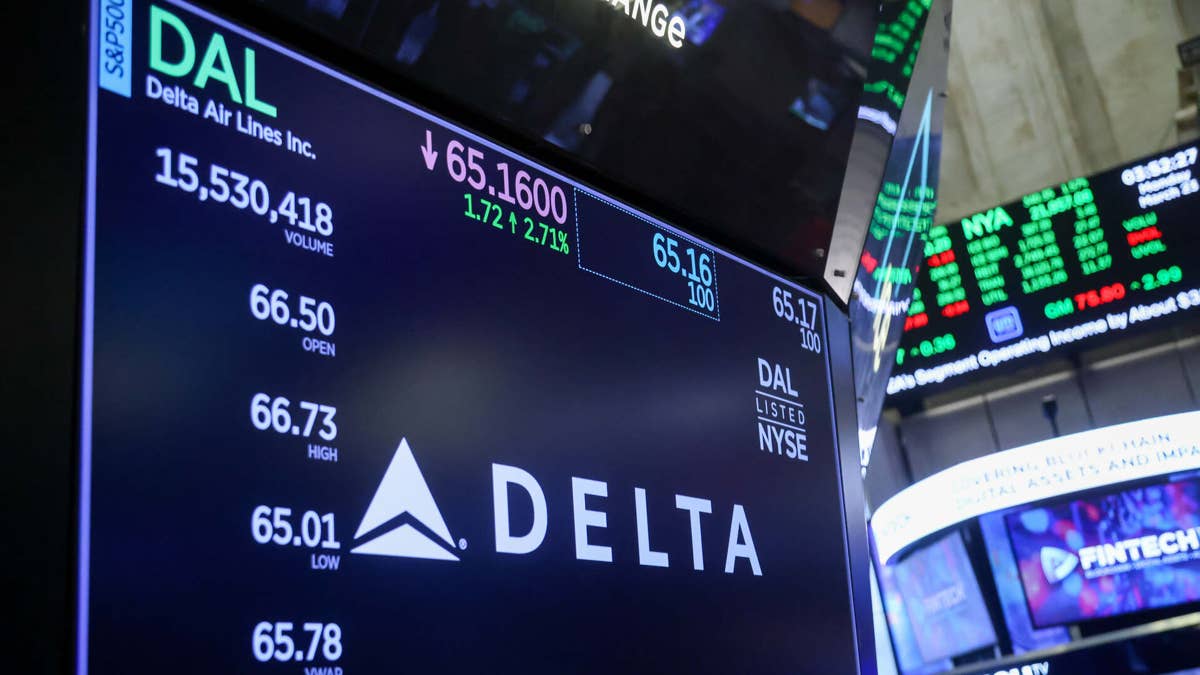
So when Berkshire Hathaway's 13F filing landed on Friday, May 15, revealing a brand-new $2.65 billion stake in Delta Air Lines (DAL), the market paid attention. Berkshire Hathaway (BRK.A) (BRK.B) has built a reputation for holding many of its top stock positions for years, and in some cases decades, reflecting the firm’s low-turnover, high-conviction investment approach.
That long-term strategy has made Berkshire’s portfolio one of the most closely watched models for investors seeking ideas for backtesting and portfolio replication. Berkshire’s latest reported 13F filing for the first quarter of 2026 showed roughly $263.1 billion in managed 13F securities, with its top 10 holdings accounting for 90.72% of the portfolio. Its largest position remained Apple, with Berkshire holding 227.9 million shares, WhaleWisdom noted.
This is Greg Abel's Berkshire now. The new CEO is making his first major portfolio statement, and he chose a 101-year-old airline — specifically, the best-run airline in America.
Whether this is a new chapter for Berkshire's investing philosophy or simply a recognition that Delta today is a fundamentally different business than the airline Buffett walked away from, it is a signal worth unpacking carefully.
Berkshire's $2.65B Delta stake, and what Abel sees that Buffett didn't
Berkshire acquired 39,809,456 shares of Delta Air Lines valued at approximately $2.65 billion, according to the firm's 13F filing, making it one of the largest new positions Berkshire has disclosed in recent years.
The bull case for Delta under Abel's framework appears rooted in three structural advantages the airline has built since the pandemic that simply did not exist when Buffett exited in 2020.
- Delta's revenue mix has fundamentally shifted. Premium cabin revenue grew 14% year over year in the March quarter of 2026, according to Delta's April 8 earnings release. Loyalty and related revenue, including American Express remuneration of over $2 billion, grew 10%. These revenue streams are stickier, higher margin, and far less sensitive to fuel price swings than the commodity-priced main cabin seats that defined airline economics in Buffett's era.
- Delta's balance sheet is the best in the airline's history. Adjusted net debt fell to $13.5 billion at March quarter end, a reduction of $760 million from the end of 2025 and below 2019 levels, with investment-grade ratings at all three major agencies. Free cash flow of $1.2 billion in a single quarter, with liquidity of $8.1 billion, is not the financial profile of a structurally broken business, according to the earnings statement.
- Delta's maintenance, repair, and overhaul (MRO) operation is becoming a meaningful standalone growth engine. MRO revenue increased more than $200 million year over year in Q1, and Delta TechOps became the first North American airline MRO with full overhaul capability across both LEAP-1A and LEAP-1B engines, according to the release.
Delta Q1 2026 earnings show business outperforming, even under fuel pressure
The financial results Delta reported on April 8 were strong in context, navigating a sharp fuel cost spike while still delivering within guidance.
Delta’s Key Q1 2026 non-GAAP results:
- Adjusted revenue of $14.2 billion, up 9.4% year over year, and a March quarter record
- Non-GAAP EPS of $0.64, within initial guidance despite March fuel price spikes
- Operating cash flow of $2.4 billion
- Adjusted net debt reduction of $760 million from year-end 2025
Source: Delta Air Lines March Quarter 2026 Financial Results
Corporate travel demand was a standout. Corporate sales grew by double digits year over year, with all sectors posting positive revenue growth.
A recent Delta survey found 85% of corporate travel respondents expect their spending to increase or remain stable in the June quarter.
CEO Ed Bastian framed the quarter's significance directly. "We delivered earnings that were more than 40 percent higher than last year, even with a significant increase in fuel costs and operational disruptions across the industry," Bastian said.
For the June quarter 2026, Delta guided for total revenue growth of low-teens, operating margins of 6% to 8%, and EPS of $1.00 to $1.50, with an expected pre-tax profit of around $1 billion despite more than $2 billion in incremental fuel expense at the forward curve.
What Berkshire's Delta bet signals about Abel's investment approach
My review of the timing and scale of this position suggests this is not a passive allocation. At $2.65 billion, this is a conviction buy, large enough to signal that Abel's team conducted deep fundamental work on Delta's competitive position before committing.
Delta has been named North America's most on-time airline by Cirium for five consecutive years. It ranked ninth on Fortune's 100 Best Companies to Work For list, the only airline on it. Its SkyMiles loyalty program was ranked the world's most valuable airline loyalty program in 2026, according to On Point Loyalty's annual report.
More Airlines:
- Spirit Airlines desperately seeks help from an unexpected source
- JetBlue makes a boarding change some may like
- Another airline shuts down for summer, cancels all flights
Delta is also launching Amazon Leo's satellite technology across 500 aircraft beginning in 2028, bringing connectivity upgrades that further strengthen the premium cabin differentiation.
DAL is up 41.35% over the past year against the S&P 500's 25.21% gain, according to Yahoo Finance, but is only up 1.74% year to date, suggesting the stock has lagged recently even as the business strengthened. That gap between operational performance and share price performance is exactly the kind of setup that has historically attracted Berkshire's attention.
Abel is making a statement. Whether he is right depends on whether fuel costs moderate, corporate travel holds, and Delta's premium revenue model continues to prove its durability. The $2.65 billion bet says he believes all three.
Related: Warren Buffett's Berkshire Hathaway makes major global move again