SpaceX volatility just entered ordinary 401(k)s
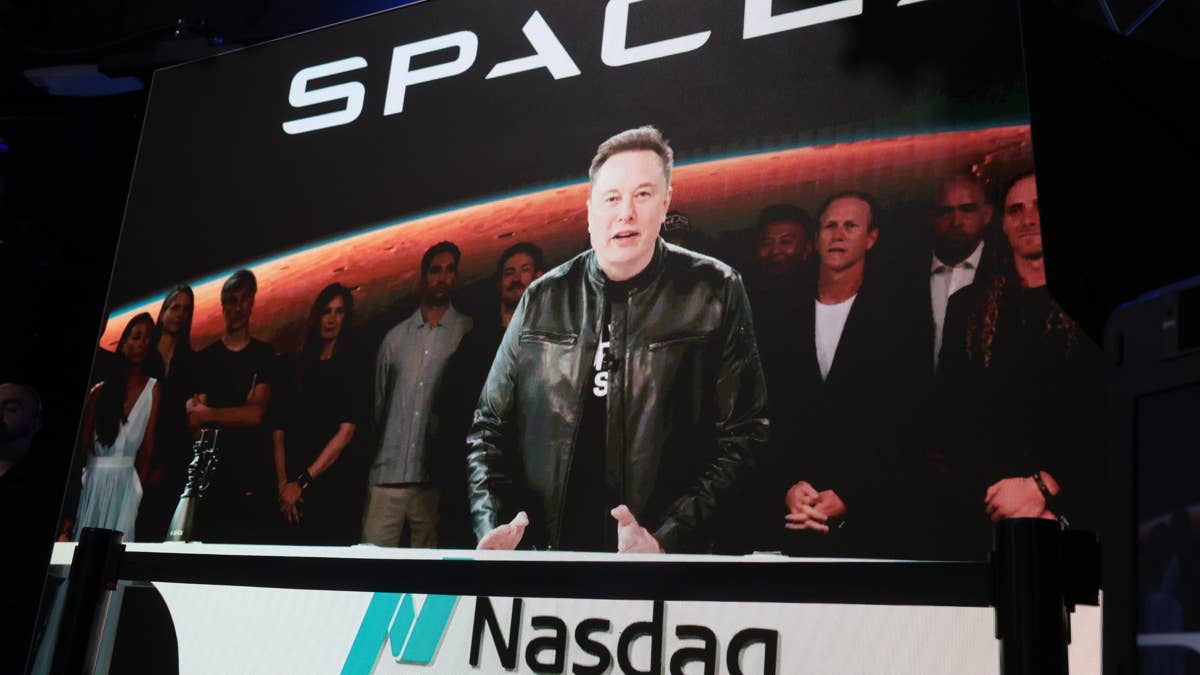
The post-IPO drop from SpaceX could be felt by traders who chased one of the hottest public offerings in years.
It’s quickly turning into something bigger.
SpaceX (SPCX) has already transitioned from market spectacle to portfolio reality. Some investors might own SpaceX without ever purchasing the stock now that major index funds from Vanguard and BlackRock include the Elon Musk-led rocket, satellite connectivity and artificial intelligence company.
That’s the hidden risk in the stock’s early volatility.
Shares of SpaceX have plummeted from the highs of last week’s record-setting IPO, trading at roughly $156 on June 24. The stock still trades well above its $135 IPO price, but the rapid transition from enthusiasm to drawdown shows just how quickly a moonshot firm may start to affect normal portfolios.
The question for regular investors isn’t whether they bought SpaceX, but if their index funds did.
SpaceX is turning passive funds into IPO buyers
For years, financial advisors have pitched ordinary investors on index funds as the “boring” half of the portfolio.
Much of that rep is earned. Broad market exchange-traded funds like the Vanguard Total Stock Market ETF (VTI) and iShares Core S&P Total U.S. Stock Market ETF (ITOT) allow investors exposure to thousands of stocks, lower single-company risk, and keep fees low.
But dull doesn’t mean static.
When a significant new firm goes public, the indexes that form the basis of those funds have to figure out when and how to incorporate it. That typically technical decision has become a far bigger topic for SpaceX investors.
Related: SpaceX’s $600 billion wipeout tests investor patience
Some of Vanguard’s index funds might quickly snap up a big IPO, the company said, with VTI expecting to add qualifying IPOs after the close on the fifth trading day, depending on the underlying index rules.
The stock was among the first to be included in indexes from the Center for Research in Security Prices and S&P Dow Jones, and VTI and ITOT now hold modest SpaceX weightings.
That's important since many times these funds are used in retirement accounts, brokerage accounts and long-term savings programs. Investors who thought they had avoided IPO risk may nonetheless have indirect exposure through default vehicles they already hold.
The exposure in broad market funds is minimal. SpaceX is one stock out of thousands.
But the psychological change is tremendous.
A high-profile IPO is no longer the exclusive domain of day traders, growth funds or Musk devotees. Being included in indexes means SpaceX is being added to the portfolios of everyday investors who may have opted to invest passively so they wouldn’t have to make individual stock calls.
SpaceX investors should watch what happens next
The first thing ordinary investors should look for is if they own SpaceX indirectly.
That does not mean panic. In wide funds like VTI and ITOT, SpaceX is probably a tiny holding, since those ETFs contain thousands of firms. As of June 24, VTI was trading at $363.70, and ITOT was trading at about $161.20.
The greatest risk may be from more concentrated funds.
The Nasdaq 100 rules changed, allowing the company to be included as early as early July, according to Investors Business Daily. Funds that track the Nasdaq 100 might own a bigger piece of SpaceX than regular retail funds, because the index is market-cap-weighted.
That would matter since Nasdaq 100-linked products are held largely by ordinary investors who desire exposure to big technology and growth businesses. If SpaceX gets into such funds soon, its fluctuations could be more evident in portfolios than they are in total-market ETFs.
Investors should also pay attention to analyst coverage.
By the time the IPOs are out and banks and outside experts start producing models, price goals and risk evaluations, the companies are often in a new market phase. That can shift the focus from the dream to the figures.
Those data will have to answer some serious questions for SpaceX.
Key takeaways for SpaceX investors
- SpaceX is now appearing in major index funds, including VTI and ITOT.
- That means some investors may own SpaceX without buying SPCX directly.
- The stock has been highly volatile since its June 12 IPO.
- Broad-market fund exposure is small, but Nasdaq 100 inclusion could make SpaceX more visible.
- Investors should watch index additions, analyst coverage and lockup-related selling pressure.
- The key risk is not just SpaceX’s stock price, but how much IPO volatility is entering passive portfolios.
Will Starlink continue to grow? Can support the valuation demand? Will government and defense work continue to be a sustainable tailwind? Can it leverage its space and satellite assets into a larger AI infrastructure platform? And can public investors stomach the volatility of a corporation still valued on massive future expectations?
The third problem is supply.
Lockup dynamics could cause future selling pressure as more shares become accessible over time.
That suggests index purchasing could not be the only thing driving the stock. Insider selling, valuation worries or fading IPO euphoria can all be problems for forced demand from funds.
SpaceX’s index debut changes who owns the risk
Traders were always going to pour in behind SpaceX’s IPO.
It has all the ingredients for a market spectacle: Elon Musk, rockets, satellites, relevance to national security, commercial space goals and a big valuation.
But the more significant development is more muted.
SpaceX is going from a stock people want to purchase to a stock many investors may own by default. That shifts the story from IPO excitement to building a portfolio.
The takeaway for regular investors is not that index funds are suddenly unsafe. Broad market ETFs nevertheless diversify over thousands of companies, and a small SpaceX weighting is unlikely to dominate returns over the long term.
The lesson here is that passive investment doesn’t remove vulnerability to market manias. It packages them in a different way.
When a company is big enough and important enough, it gets owned by index funds. That offers investors the upside if SpaceX becomes one of the defining publicly traded firms of the next decade.” It also exposes them to the volatility if the stock can't expand to its valuation.
That’s why investors should worry this week.
The spectacular early sessions of SpaceX are no longer simply a chart for IPO traders. They are an early test of how one of the market’s biggest new growth stories will perform as it reaches the accounts ordinary people use to save for retirement.
The rocket company is in index funds.
Now investors have to decide how comfortable they are with owning the turbulence.
Related: SpaceX stock joins AI bond frenzy