AI’s energy appetite is reshaping the electric grid
The five largest technology companies on earth spent more than $400 billion on capital expenditure in 2025, most of it toward AI. Chips, data centers, servers, and software pipelines absorbed capital at a pace the technology industry had never seen. The constraint holding the whole machine back has almost nothing to do with any of those things.
According to the International Energy Agency, global data center electricity consumption is on track to roughly double by 2030, reaching levels equivalent to Japan's entire annual power demand today. In the United States, data centers are projected to account for nearly half of all electricity demand growth through the end of the decade. That shift is creating a secondary investment cycle in energy infrastructure that is reshaping which companies and regions matter most to AI's next phase.
Electricity is becoming as strategic as semiconductors.
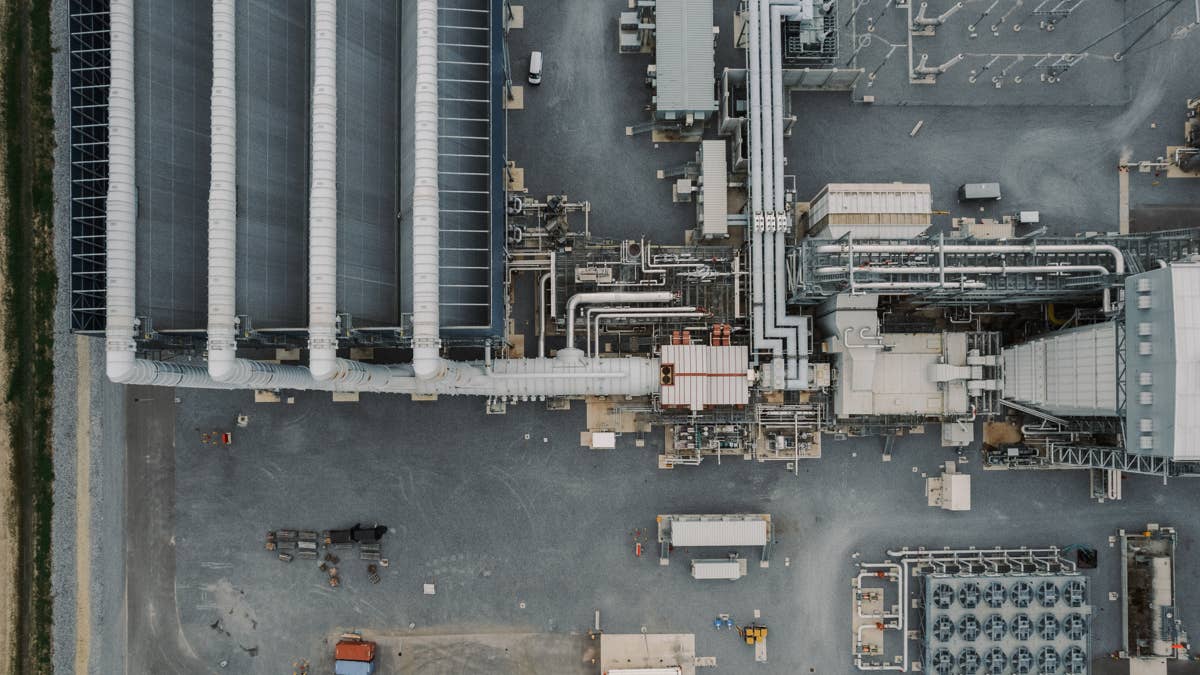
Training and deploying frontier AI models burns through electricity at a scale that was barely imaginable a decade ago. The largest data center campuses consume as much power as small cities, and the demand is accelerating faster than grid infrastructure can accommodate.
Utilities are scrambling. Permitting timelines are stretching. The IEA estimates that roughly 20% of planned data center projects globally are already at risk of delays caused by grid constraints. Transformer and cable delivery lead times have doubled in the past three years. Building new transmission lines typically takes four to eight years in advanced economies.
Related: Chevron and Microsoft bet big on data centers
Leo Fan, founder of Cysic, believes the bottleneck is now physical rather than technical.
"Yes. The constraint is no longer just chips or capital. It is deliverable power, which includes generation, transmission, cooling, interconnection and more. AI growth will increasingly depend on who can secure reliable electricity," Fan said in an interview with TheStreet.
The shift is already visible in the data. Goldman Sachs Research projects US data center power demand will more than double to 66 gigawatts by 2027 from 31 gigawatts today.
PJM, the grid operator covering a large stretch of the northeastern United States, projects that data centers will account for 30 of the next 32 gigawatts of load growth by 2030. That is not an AI story. It is an infrastructure story.
The connection problem that generation alone won't solve
The instinct when power demand rises is to build more generation. The people working closest to grid infrastructure say that instinct is missing the actual problem.
Samuel Videau, chief technology officer at Genius, put it plainly.
"Everyone talks about generation. That's not the bottleneck. The bottleneck is connection. When a hyperscaler tries to buy a [digital] miner just to skip the interconnection queue, that tells you everything. Transmission and permitting are the real constraints. Connected megawatts trade at a premium to everything else in the sector," Videau said in an interview with TheStreet.
The CoreWeave story makes his point concrete. CoreWeave's Core Scientific deal was structured primarily to secure 1.3 gigawatts of grid-connected power capacity. The $9 billion price tag was not for computing equipment. It was for an existing grid connection that would have taken years to permit and build from scratch.
Goldman Sachs Research estimates the grid itself may require approximately $720 billion in spending through 2030 to meet rising data center demand. The transmission bottleneck is not a side issue. It is the rate-limiting step.
A decade of tight power markets and the investor opportunity
For investors trying to position around AI growth, the electricity constraint is gradually reframing which companies matter. Michael Heinrich, CEO of 0G Labs, argues the scale of what is coming is still not fully priced into how the market is thinking about AI infrastructure.
More AI:
- The new Chinese AI model rattling U.S. tech investors
- Anthropic restores access to Mythos 5 for select organizations
- SoftBank CEO offers stinging critique of Musk’s AI bet
"Power is quietly becoming the hard ceiling on AI. The four largest hyperscalers spent over 500 billion dollars on capex in 2025, and AI is on track to double US data center electricity use by 2030. You cannot permit, finance, and build gigawatts of new generation as fast as model demand is growing, so the grid, not the GPU, is the bottleneck," Heinrich told TheStreet.
He argues the policy response has been too narrowly focused on new centralized generation. The more valuable near-term opportunities are in the physical infrastructure that shortens the time between planning and operational power capacity.
Where new capital is beginning to flow in energy infrastructure:
- On-site natural gas generation: Around one-fifth of US data center projects under development are now building their own gas-fired power to bypass grid connection delays, according to IEA analysis. This is creating new supply chain demand for turbine manufacturers and fuel suppliers.
- Small modular reactors: Microsoft, Google, and Amazon have all signed offtake agreements with nuclear developers. The IEA projects the first SMRs come online around 2030, partly to serve data center demand for reliable, always-on power.
- Grid equipment: Transformer and cable shortages are now a standalone bottleneck. Delivery lead times for critical grid components have doubled over the past three years, and equipment manufacturers are running full order books years out.
- Battery storage inside data centers: The IEA projects 20-25 gigawatts of battery storage could be installed inside data centers globally by 2030, potentially making them stabilizing assets to the broader grid rather than purely consumers of it.
- Demand response markets: Grid operators are placing increasing value on industrial loads that can power down quickly during grid stress. As AI data centers require near-constant uptime, other large electricity consumers with flexible loads are becoming more valuable, not less, as grid pressure mounts.
Barre/Getty Images
Fan, the founder of Cysic, sees the investment cycle lasting years, not quarters. He expects utilities to benefit from significant capital spending opportunities, but warns that grids will face higher congestion, more price volatility, and reliability pressure if investment lags behind demand. Getting the timing right matters as much as getting the direction right.
"Expect a decade of tight power markets, rising baseload value, and a scramble for anything that shortens time to energized capacity. The opportunity is in the picks and shovels of power delivery," Heinrich added.
How energy-intensive computing is already reorganizing around power
The pressure on grid capacity is not only changing where new AI data centers get built. It is also reshaping operators across the broader computing industry who have long competed for large blocks of cheap electricity.
AI hyperscalers are now paying premium prices for reliable, grid-connected capacity, changing the economics for every other large electricity consumer in the market.
Many of the physical sites best positioned for AI workloads currently run other types of compute operations. Those operators are weighing the economics differently as the gap between what hyperscalers will pay and what traditional computing workloads generate continues to widen.
Some are converting existing sites. Others are moving toward stranded energy sources, curtailed renewable generation, and behind-the-meter power projects that AI data centers cannot easily reach.
Bitcoin mining is worth understanding in this context. At its peak, the global Bitcoin network consumed more electricity than many mid-sized countries, an estimated 120 to 150 terawatt-hours annually. Mining operators built large-scale power infrastructure specifically designed for high-density, continuous compute loads. They negotiated long-term contracts with utilities, developed expertise in managing enormous electricity demand, and in many cases secured grid connections that took years to establish. That physical infrastructure, built for one form of intensive computation, is now being evaluated by operators running a very different one.
The economics are shifting fast. AI workloads pay considerably more per megawatt than proof-of-work mining at current prices, so grid-connected mining sites with existing utility contracts are attractive acquisition targets. Some operators are converting capacity directly. Others are holding their positions and leasing to AI tenants. The result is a quiet reorganization of who controls the grid-connected compute capacity that AI companies need most urgently.
"The map is splitting. Grid-connected US sites convert to AI, and hash rate chases stranded power in Paraguay, Ethiopia, the Gulf," Videau added.
The distributed, behind-the-meter opportunities that geographic dispersal creates are the same ones Heinrich identifies as a natural home for decentralized AI infrastructure. Spreading compute load across a wider range of power sources, rather than concentrating everything in a handful of large campuses, could reduce pressure on the existing grid while opening capacity in places the major hyperscalers have not yet reached.
For investors, the energy and technology sectors are converging on the same conclusion. AI capacity is increasingly an infrastructure story as much as a technology one. The companies positioned to deliver reliable power, build grid connections, manufacture critical equipment, and upgrade transmission networks may define as much of AI's next chapter as the companies building the models themselves.
Related: Nordic energy CEO sends blunt warning on oil and economy