Home Depot and Lowe’s use controversial retail theft system
Retailers have always been secretive about the security measures used in stores, because if you tell the bad guys how you're fighting them, they can plan to evade those measures.
"Retailers commit an incredible amount of resources to keep stores safe for employees and customers. But combating the growing problem of organized retail crime has been tremendously challenging, particularly as criminals become more brazen and sophisticated in their operations and exploit online marketplaces to sell stolen goods," Retail Communities Foundation Lisa LaBruno told the Retail Industry Leaders Association (RILA).
Retail theft is real, and it's something stores have struggled with. Still, preventing theft in your store is entirely different than handing data to law enforcement that leads to people getting arrested for crimes not committed there.
What are Lowe's and Home Depot doing?
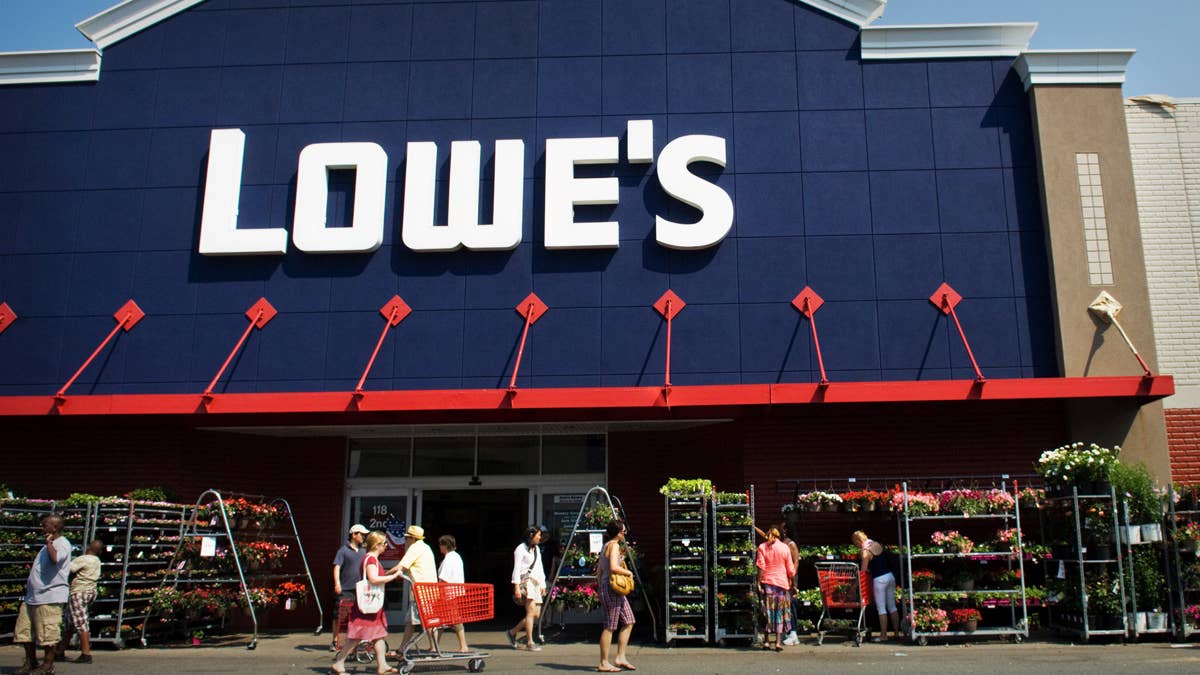
Both Home Depot and Lowe's have been using something called Flock Safety at select stores.
"Flock Safety's automated license plate reader system captures vehicle data at retailers in Ohio and shares it with law enforcement for various purposes, including theft investigations and immigration enforcement. Flock's AI-powered cameras scan and log license plate numbers, vehicle make, model, color, and physical markers, creating a searchable database accessible to law enforcement agencies," according to Gadget Review.
Home Depot and Lowe's share data from hundreds of Flock cameras with police, according to 404 Media's investigation.
More Retail:
- 60-year-old retailer closes over 240 locations across 35 states
- Retail giant exits U.S. fashion after multi-million-dollar scandal
- 79-year-old fast-fashion retailer closes 128 stores
Civil rights groups have expressed deep concerns over the technology.
"Our biggest concerns lie with government use, but we are also deeply worried about unregulated and unfettered access by government and law enforcement to data first obtained via non-government sources," the ACLU of Ohio's legislative director told The American Prospect.
Flock has pushed back
Flock itself does not sell data. That, however, is kind of a technicality because its customers can.
“One hundred per cent of data, which is the photo of the public license plate, is owned by our customers,” Flock's Public Relations Manager Kerry McCormack told The Guardian. “So, you own that data. It is never sold. We don’t have that in our model. It is written into your contract. We do not sell data.”
Much of the controversy has been around data being shared with ICE to aid immigration enforcement.
“We’re not limiting their access essentially to searches… associated [with] their case,” replied Patrick Krieg of the Dunwoody, Georgia, police. “Say that the agency has a representative who is assigned to a unit that is associated with said ICE, would they be able to search our database? Most likely.”
In a website post in January, Flock said it did not work with US Immigration and Customs Enforcement (ICE) or any other sub-agency of the Department of Homeland Security, noting that it had concluded pilot programs with federal agencies in August.
Shutterstock
Flock's technology has been used in controversial ways
Not every use of Flock's technology has been controversial because it relates to the politically hot-button topic of immigration.
- As of April, police officers had used Flock and other ALPR cameras in 16 instances to “keep tabs on their [own] romantic interests, including current partners, exes, and even strangers who unwittingly caught their eye in public,” the Institute for Justice reported.
- Last year, Texas cops used Flock to search 83,000 cameras nationwide, including in states where abortion is legal, hunting for a woman they said had performed a self-administered abortion, 404 Media reported.
- In another instance, the same news outlet found that Flock’s sales workers ran a pitch by accessing the company’s cameras in an Atlanta suburb, including “in a children’s gymnastics room, a playground, a school, a Jewish community center, and a pool.”
The concern is not limited to law enforcement. Privacy advocates generally argue that any organization that collects large amounts of location or surveillance data — whether a retailer, a technology company, or a government agency — creates the possibility that someone with authorized access could use that information in ways that were never intended.
I've seen a version of that dynamic play out before. In the late 1990s, a technology employee at a company where I worked improperly used internal access to learn that his girlfriend was cheating on him. He was fired, but the incident underscored a broader point: When people have access to sensitive information, misuse is always a risk.
Home Depot and Lowe's have downplayed concerns
Home Depot shareholders voted down a shareholder proposal to produce a report on Flock's use, after board members recommended voting against it, according to Biz Journals.
Lowe's has also faced pressure over using the technology.
"In an April 1 letter addressed to CEO Marvin Ellison and other Lowe’s executives, which was viewed by Fast Company, 38 organizations including Fight for the Future, Electronic Frontier Foundation (EFF), the American Federation of Teachers, and more, demanded the company drop its contract with Flock," Fast Company reported.
The letter states that the country is “at a serious inflection point” where “repercussions of mass surveillance have life-altering consequences for the life and liberty of everyday people.”
It continued, “Time and again, we’ve seen how automated license plate reader (ALPR) cameras have exposed individuals to danger and persecution, whether they be protesters, legal observers, those seeking reproductive and gender-affirming care, or communities of color who are frequently profiled and harassed.”
The groups assert that Lowe’s has a responsibility to act in the best interest of the greater public, and that the partnership with Flock aligns the company with “brutal immigration” policies and “authoritarian rule.”
Lowe's, at the time of the Fast Company article's publication, had not responded.
Related: Costco quietly makes a key credit card change