Bessent doubles down on short-term debt as rates turn
Anyone who has carried a balance on a credit card knows the part of debt that actually hurts. It is not the number you owe. It is the rate attached to it.
A $10,000 balance at 3% is a nuisance you manage. The same balance at 20% starts making decisions for you.
The federal government runs on that same arithmetic, with more zeros and fewer exits. Washington has spent the past several years borrowing the way a household leans on a low introductory rate, taking the cheap money now and assuming it stays cheap.
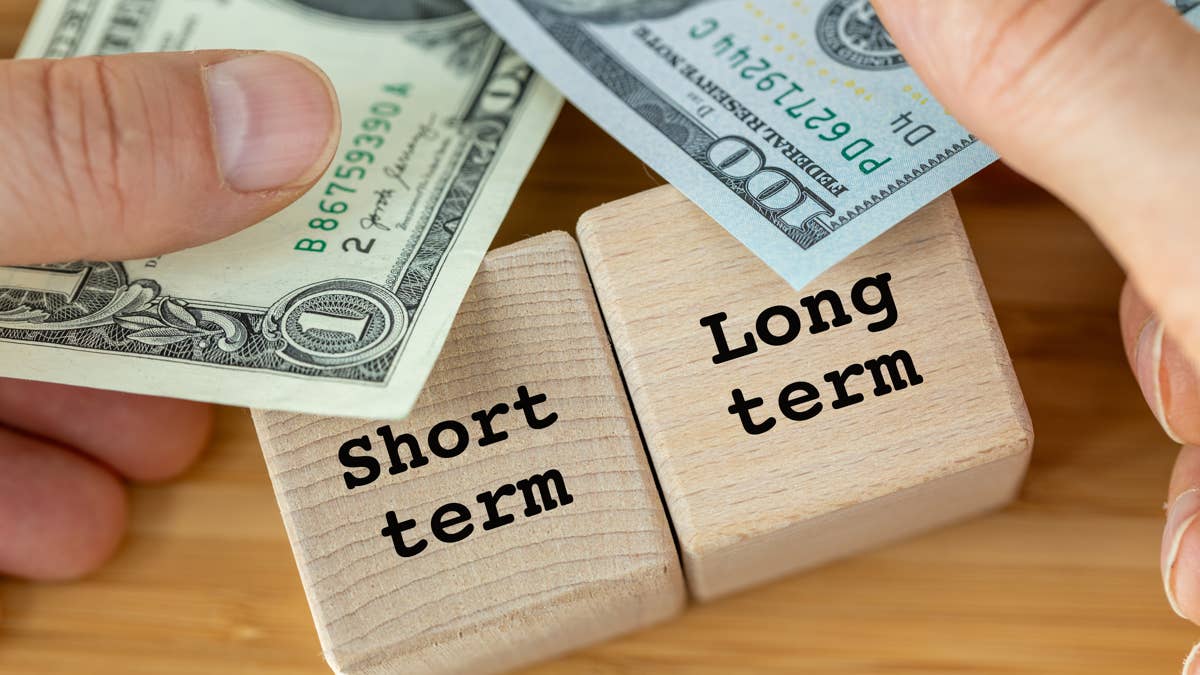
For a while, the assumption held. Short-term Treasury bills yield less than 10-year and 30-year bonds, and leaning on them kept the annual interest bill from climbing even faster than it has.
That assumption is now under pressure from the one institution the Treasury cannot control.
The government is refinancing trillions of dollars every few months, and the Federal Reserve under new Chair Kevin Warsh has started talking about raising interest rates rather than cutting them.
Why the Treasury leaned so hard on short-term bills
The logic was never complicated. Bills maturing in a year or less cost less to issue than long bonds, and with an annual deficit projected near $2 trillion, cheaper wins the argument every time.
About 85% of debt issuance over the past few years has been Treasury bills maturing within a year, according to Fortune, citing research from Capital Economics.
More Economic Analysis:
- JPMorgan CEO has strong warning on America's skilled workforce
- Nvidia CEO doubles down on Al and stock market verdict
- Warren Buffett pulls no punches on stock market for 2026
The consequence is a debt stack that turns over at speed. Roughly 20% of outstanding federal debt comes due in the next four months, and that share reaches 33% within a year.
Treasury Secretary Scott Bessent criticized this approach before he took the job. He has since extended it.
The department's most recent refunding statement committed to "maintaining nominal coupon and FRN auction sizes for at least the next several quarters," according to the Treasury Department. An FRN is a floating rate note, a security whose payout resets with short-term rates.
The Treasury also has more competition for money than it did a year ago. Hyperscalers are issuing heavy volumes of debt to fund artificial intelligence buildouts, and Germany plans to borrow 800 billion euros by 2030 for defense.
More borrowers chasing the same pool of savings means higher yields for everyone drawing on it, including the U.S. government.
What a hawkish Fed does to the debt math
Every dollar of short-term debt is a dollar that gets repriced soon. That is a gift when the Fed is cutting. It is a bill when the Fed is not.
A sharp rise in short-dated yields from an unexpected hike is "the biggest risk to the debt burden," wrote Ariane Curtis, senior North America economist at Capital Economics, in a note reported by Fortune.
Half of Fed policymakers have penciled in increases, and analysts at Bank of America (BAC) moved their forecast to three quarter-point hikes this year, up from a base case of no change at all.
Related: Scott Bessent pitches parents on Trump Accounts launch
Cleveland Fed President Beth Hammack said inflation is running too high and that the labor market sits "right around my level of maximum employment," according to her LinkedIn post. She added that businesses are now asking her for action on prices, and that consumers describe a growing sense of despair.
Warsh has been less explicit and no less pointed. "We have the tools to do it," he told senators during his first appearance on Capitol Hill as chairman, TheStreet covered.
The backdrop is not helping. The collapse of the U.S.-Iran ceasefire has pushed oil higher again, and the national average for a gallon of gasoline is back above $4.
Energy prices feed inflation, inflation feeds a hawkish Fed, and a hawkish Fed feeds the Treasury's refinancing cost. The loop closes on itself.
How the interest bill reaches your household
This is where the abstraction ends.
When I mapped the refinancing calendar against the Fed's meeting schedule, the mismatch was the part that stayed with me. A decision made in a single afternoon reprices roughly a third of the national debt inside 12 months. Nobody in Congress votes on that.
Here is what the bill already looks like before any hike lands:
- Net interest on the national debt is projected to total $1.0 trillion in fiscal 2026, according to the Congressional Budget Office (CBO).
- That works out to roughly $2.8 billion a day, according to the Peter G. Peterson Foundation.
- Interest already costs more than Medicare and more than national defense, according to the Committee for a Responsible Federal Budget.
- Federal debt held by the public hits 101% of gross domestic product this year, according to the CBO.
Interest is not a program anyone campaigns on. It is a fixed charge that clears before Social Security checks and before anything a member of Congress promised you. When it grows, something else gets squeezed.
For a portfolio, the transmission is faster. Higher short-dated yields pull money toward cash and money market funds, which have swelled past $7 trillion in assets, according to Risk.net. Every equity valuation has to beat that number to justify itself.
Short-term yields also price the credit you actually touch. Credit card rates and small business lines of credit move with the front end of the curve, not the 30-year bond.
What to watch as the debt path narrows
The bond market is already asking the harder question.
Hoisington Investment Management, bullish on Treasuries for more than three decades, turned bearish this month, with its quarterly report noting that investors "increasingly demand a higher risk premium on Treasury securities," according to Bloomberg.
That is a sentence about confidence, not arithmetic. Arithmetic can be refinanced. Confidence cannot.
My reading of the setup is that the Treasury has not made a mistake so much as spent its own margin for error. Short bills were the right call when rates were falling. They leave nothing in reserve if rates rise.
Two dates matter next. The Federal Open Market Committee (FOMC) meets July 28 and 29, where futures traders put the odds of no change near 90%. The Treasury's next quarterly refunding announcement follows in early August.
Watch whether that forward guidance on coupon sizes survives. If the language softens, the Treasury is quietly moving to lock in longer maturities before the window shuts. If it holds, Bessent is doubling down with a hawkish Fed in the room.
Neither choice is comfortable. Extending maturities means paying more today for certainty tomorrow. Staying short means a cheaper bill and a wager that the Fed blinks first.
One of those bets is wrong, and this particular invoice arrives every quarter.
Related: Scott Bessent shares the truth about American gold and dollars