PayPal (PYPL) Stock: Bull and Bear Cases After the $53B…
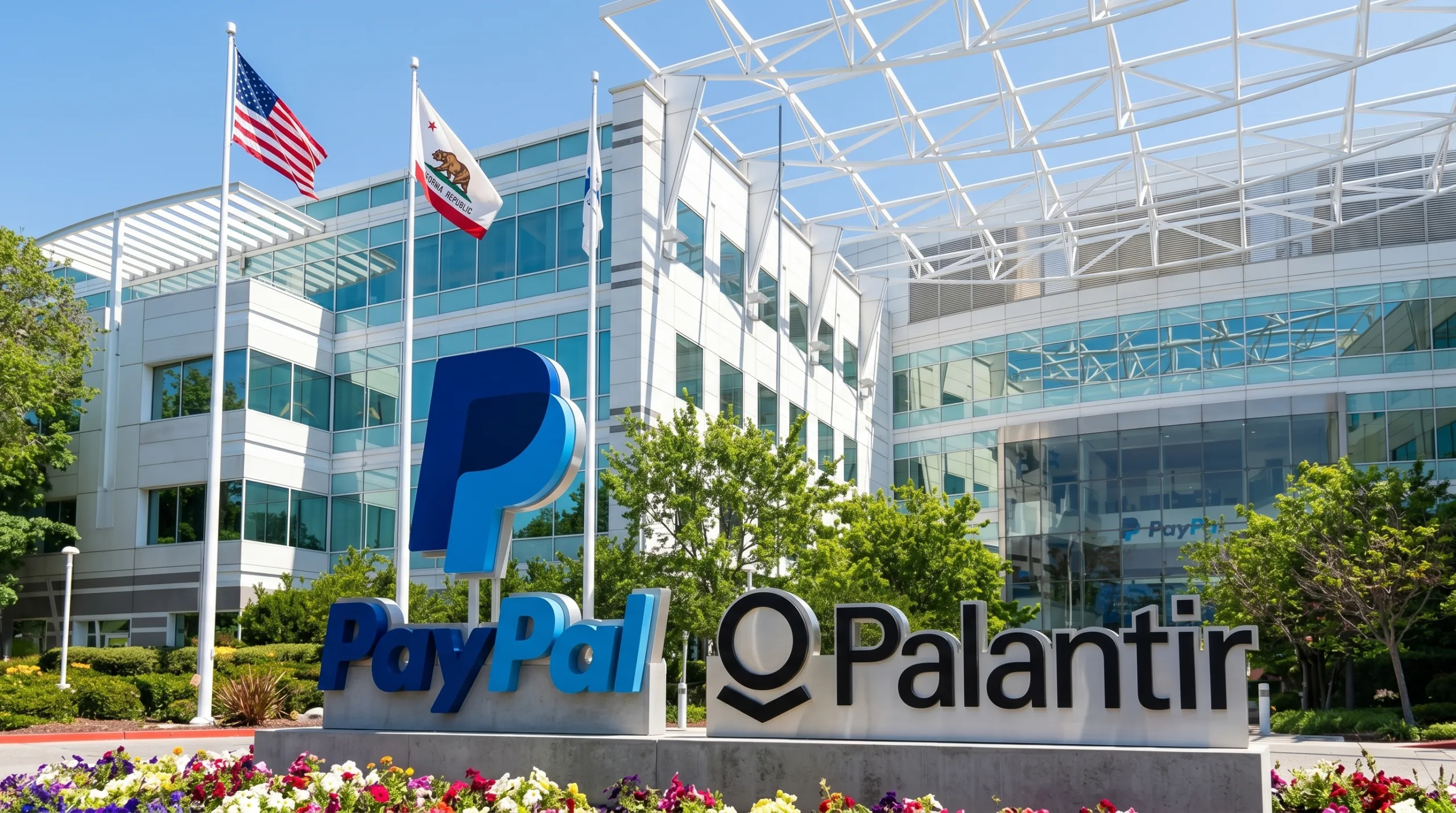
Updated 23 July 2026 — PYPL closed at $55.51 on 22 July (StockAnalysis), roughly 8% below the $60.50 a share Stripe and Advent International put on the table and about 21% below the ~$70 PayPal's board says the company is actually worth.
Verdict: this is no longer a fundamentals stock in the short run — it is a deal stock with an earnings date attached. The board formally rejected the $53 billion offer on 21 July. Q2 results land 28 July at 8:00 a.m. EST, and they are the evidence the board has to produce to justify holding out for $70. The gap between the $55.51 spot price and the $52.42 average analyst target is the deal premium — and it is exactly what a collapse would remove.
- • Stripe and Advent International bid $60.50 per share — more than $53 billion — for PayPal on 15 July 2026, a 28% premium to the prior close, backed by roughly $50 billion in committed bank financing, with the two buyers splitting ownership 50/50 — CNBC/Reuters, 15 July 2026
- • PayPal's board formally rejected the offer as inadequate on 21 July, holding out for approximately $70 a share, advised by Goldman Sachs and Evercore — PYMNTS
- • Cantor Fitzgerald pegs PayPal's fair value at $70 a share; asset manager Davis Park Management calculates $65.20
- • Broad analyst consensus is far more cautious: an average target of $52.42 and a median of $48 across 43 analysts polled by S&P Global, consensus rating Hold, range $32 to $147.39 — StockAnalysis
- • Q2 2026 results are due 28 July 2026 at 8:00 a.m. EST, per PayPal's own investor-relations calendar — PayPal IR
- • In Q1 2026, transaction margin dollars grew 3% to $3.81 billion and online branded checkout TPV grew 2% FXN, up from 1% in Q4 2025; PayPal is spending $400 million in 2026 to repair checkout — PayPal Q1 2026 release
- • PYUSD, the asset Stripe is arguably really bidding for, sits near $2.9 billion in market cap — roughly 1.4% of the stablecoin market, and down from a ~$4.1 billion peak in March 2026
- • 52-week range: $38.46 – $79.50; market capitalisation approximately $49 billion
What actually happened: a rejection that isn't a refusal
On 15 July 2026, Stripe and Advent International offered $60.50 a share for PayPal — a 28% premium, more than $53 billion, financed with roughly $50 billion of committed bank debt. On 21 July, PayPal's board said no. The precise wording matters: the board called the offer inadequate rather than unwelcome, and left the door open. That is the standard opening move of a negotiation, not the end of one. The number the board is anchored to is roughly $70 a share — not an arbitrary ask. It is approximately where PYPL traded at its 52-week high in October 2025, and it is where Cantor Fitzgerald independently marks fair value. Davis Park Management lands lower, at $65.20. Goldman Sachs and Evercore are advising the board, and both back the position that $60.50 undervalues the business. Stripe's motivation is narrower than the headline suggests. It is not primarily bidding for PayPal's 439 million consumer accounts, which have been losing checkout share for three years. It is bidding for PYUSD's distribution across roughly 70 markets and for the consumer trust layer that agent-driven commerce will need. FinanceFeeds examined the acquirer's side of this trade in detail in Stripe IPO 2026: the $53B PayPal bid changes the $159B math — the short version being that the arbitrage only works while Stripe stays private.The bull case: a floor the market rarely gets
The strongest argument for owning PYPL here is structural rather than operational. A live, financed bid at $60.50 from a credible consortium puts a soft floor under the stock that did not exist three weeks ago. Bidders who arrange $50 billion of committed financing and go public with a premium offer do not typically walk away at the first rejection, and the consortium is reported to want an agreement by the end of July. If the board's $70 anchor is even directionally right, the upside from $55.51 is roughly 26%. Cantor Fitzgerald's independent $70 mark is what makes that number more than negotiating theatre — it means at least one sell-side desk thinks the board's ask reflects the business rather than posturing. There is an operational bull case underneath the deal case, and Q1 gave it its first real evidence in two years: online branded checkout TPV grew 2% FXN, up from 1% in Q4 2025. That is a small number, but the direction had been flat-to-negative for three years, and it arrived alongside a $400 million investment programme and a new CEO. If the 28 July print extends that reacceleration, the board's "we're worth more standalone" argument stops being a claim and becomes a data series.The bear case: the market is not paying for the business
Here is the uncomfortable arithmetic. PYPL trades at $55.51. The average analyst price target across 43 analysts is $52.42, and the median is $48. The consensus rating is Hold. In other words, the sell-side's central view is that PayPal is worth less than where it currently trades — the stock is above fair value precisely because a bid is on the table. That framing defines the downside cleanly. Strip out the deal and the stock does not fall to some abstract discount; it falls back toward its 14 July pre-bid level of roughly $47. The 28% premium that arrived on 15 July is the same 28% that leaves if talks break down. The fundamental worry is unchanged by any of this. Transaction margin dollars grew 3% in Q1 — for a company whose core consumer checkout franchise is under sustained attack from Apple Pay, Shop Pay and Stripe's own merchant stack. PYUSD, the strategic crown jewel in Stripe's thesis, has gone backwards this year: roughly $2.9 billion today against a ~$4.1 billion peak in March, and about 1.4% of the stablecoin market. A bidder can want an asset while the asset is still shrinking. Two further risks deserve naming. Antitrust review of a combination of the two most recognisable checkout brands is a 12-to-18-month process on any realistic reading, so even a signed deal is not a quick payday. And a board that turns down $60.50 and then misses on 28 July owns the outcome entirely.Scenarios: what each level requires
| Scenario | Level | What it takes |
|---|---|---|
| Deep bear | $38 – $42 | Talks collapse and Q2 shows checkout re-decelerating. Retests the $38.46 52-week low. This is the "no deal, no turnaround" case. |
| Bear | ~$47 | Consortium walks; no counterbidder emerges. The stock gives back the deal premium to its 14 July pre-bid level. Roughly 15% below spot. |
| Base | $60.50 | The standing offer is accepted, or a modest sweetener is agreed near it. Roughly 9% above spot. |
| Bull | ~$70 | The board wins its ask, or a competing bidder appears. Matches Cantor Fitzgerald's fair value and the October 2025 high. Roughly 26% above spot. |
What to watch on 28 July
Earnings land at 8:00 a.m. EST on 28 July, before the open, per PayPal's investor-relations calendar. Consensus EPS estimates cluster around $1.28, though compilers disagree on the year-on-year direction — which is itself a signal that the headline number is not where the information is. Three things matter more than EPS:- • Online branded checkout TPV growth. Q1 was 2% FXN, up from 1%. A third consecutive quarter of acceleration is the single strongest card the board can play against a $60.50 bid. A reversal hands the consortium its argument.
- • Transaction margin dollars. Q1 grew 3% to $3.81 billion. This is the profitability line that survives a checkout narrative, and it is what a leveraged buyer is underwriting $50 billion of debt against.
- • Any guidance change or standalone-value framing. A board that has just rejected a bid at $60.50 has an obvious incentive to raise guidance if it credibly can. If management declines to, that silence is the tell.
Quick Take
PYPL at $55.51 is priced between a rejected $60.50 bid and a $52.42 average analyst target — meaning the market is paying a deal premium the sell-side does not think the business supports on its own. The asymmetry is roughly 26% up to the board's $70 anchor versus roughly 15% down to the pre-bid $47 level, with a deeper $38–42 zone if the deal dies and Q2 disappoints. The 28 July earnings print is the referendum: branded checkout TPV, not EPS, is the number that decides whether the board's holdout was conviction or a bluff.
FAQ
Did PayPal reject the Stripe offer outright? The board rejected the $60.50-a-share offer as inadequate on 21 July 2026, but did not reject the idea of a sale. It is pushing for a price closer to $70 a share, advised by Goldman Sachs and Evercore, and reporting indicates the consortium wants an agreement by the end of July. This reads as a negotiation over price, not a refusal to engage. Why is PYPL trading below the $60.50 offer? Because the offer is not a certainty. At $55.51 the stock sits about 8% below the bid, which is the market pricing the combined risk that talks fail, that antitrust review blocks or delays the deal by 12 to 18 months, or that financing conditions change. A stock trading at a discount to a live bid is normal; the size of that discount is the market's estimate of completion risk. What is PayPal actually worth without a deal? The sell-side's central estimate is below the current price: a $52.42 average target and a $48 median across 43 analysts polled by S&P Global, with a Hold consensus. The bulls are far higher — Cantor Fitzgerald at $70, Davis Park Management at $65.20. The spread between $48 and $70 is unusually wide and reflects genuine disagreement about whether the checkout franchise is stabilising. When does PayPal report Q2 2026 earnings? 28 July 2026 at 8:00 a.m. EST, per PayPal's investor-relations events calendar, with a live webcast at investor.pypl.com. The timing is unusually consequential because it is the first hard data since the board rejected a $53 billion offer on the grounds that the company is worth more standalone. What is PYUSD's role in the bid? Stripe's strategic interest is concentrated in PYUSD's distribution across roughly 70 markets rather than in PayPal's legacy checkout business. The complication is that PYUSD has contracted this year — roughly $2.9 billion in market cap against a ~$4.1 billion peak in March 2026, and about 1.4% of the total stablecoin market. The asset is strategically valuable and currently shrinking at the same time. Could another bidder emerge? It is the clearest route to the $70 level short of the consortium capitulating. A public rejection at $60.50 is effectively an invitation, and PayPal's assets — 439 million accounts, Venmo, Braintree, a stablecoin — have several plausible strategic buyers. No competing bid has been reported as of 23 July 2026, so this remains a scenario rather than a development. How long would the deal take to close? A combination of the two most recognisable online checkout brands invites scrutiny from the US Department of Justice and the European Commission, with the PayPal button's merchant penetration as the central market-definition question. Twelve to eighteen months is a realistic review window, meaning even a signed agreement would not deliver cash to shareholders quickly.Related coverage
- • Stripe IPO 2026: the $53B PayPal bid changes the $159B math
- • Klarna stock forecast: the bull and bear cases
- • PayPal reorganises, creating a standalone Venmo division