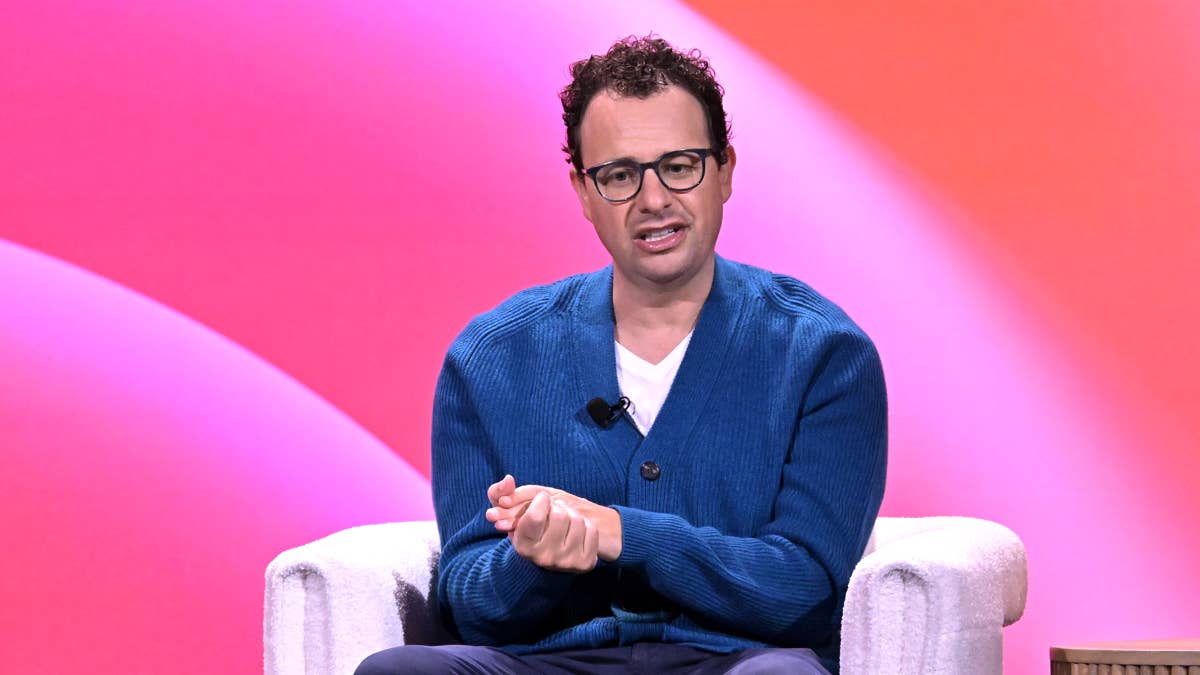
Adobe’s outgoing CEO makes CEO big bet on the future
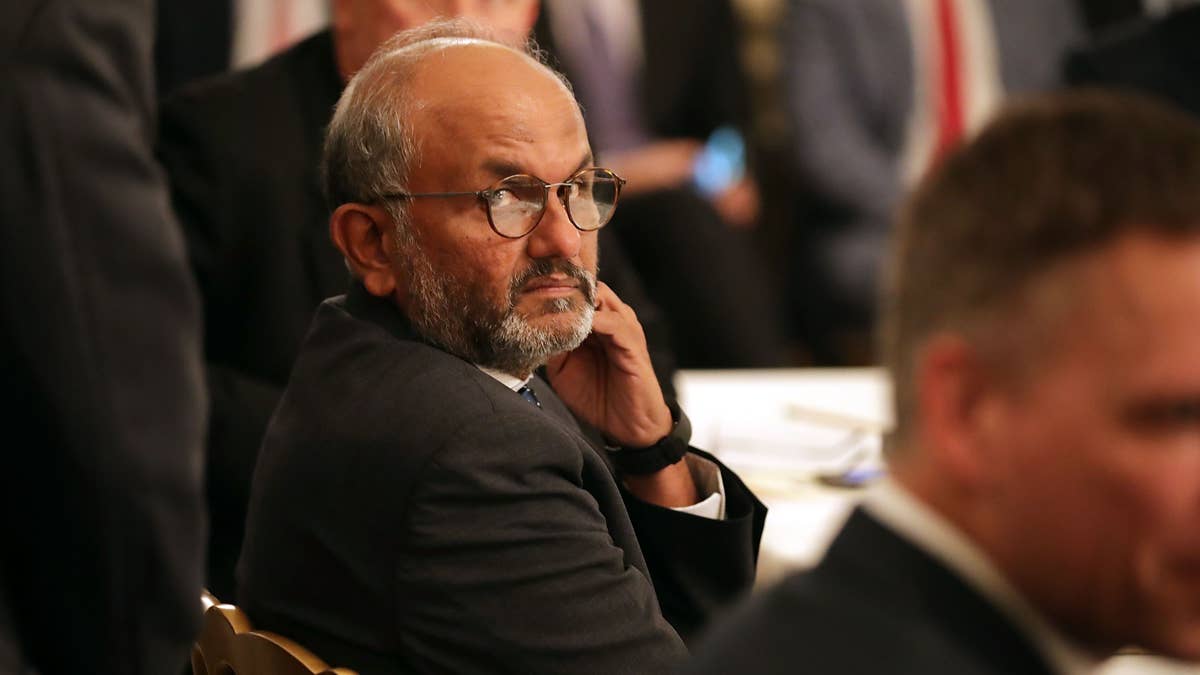
Wall Street routinely punishes companies for doing exactly what they are supposed to do: build for the long term. Adobe just learned that lesson the hard way, watching its shares slide even as it broke financial records.
Adobe (ADBE) posted record revenue of $6.62 billion in its second fiscal quarter of 2026, beating analyst expectations on both earnings and sales. The stock fell sharply the next day to a fresh 52-week low. The gap between those two facts is not a contradiction. It is the whole story.
Adobe makes most of the software the creative world runs on: Photoshop, Acrobat, Premiere Pro, and Illustrator.
The business runs on subscriptions, tracked through a metric called Annual Recurring Revenue, or ARR. ARR measures how much recurring income a company generates. When it slows, markets react. Adobe's ARR is about to slow on purpose.
Narayen's bet: Give it away, then charge for it
Adobe's outgoing CEO Shantanu Narayen told analysts on June 11 earnings call that Adobe is redirecting web traffic away from paid sign-up flows into free, no-paywall experience across Acrobat, Express, and Firefly, its generative AI image and video tool.
Adobe is also deferring planned Creative Cloud price increases. Both decisions cut near-term ARR. Both were deliberate.
Narayen did not dispute the cost. He told analysts the strategic shift would give Adobe "singular clarity" to capture a far larger audience, according to the earnings call transcript. That trade-off, he said, was deliberate.
He pointed to Adobe Acrobat Reader as the precedent. That decision to make Acrobat Reader free produced one of the most durable distribution networks in software history. Narayen's argument is that Firefly and Express are the same bet, one generation later.
More Adobe:
- Adobe Q2 2026 Earnings Call: Updates on $ADBE outlook
- Top investment bank resets Adobe target as AI strategy backfires
- Mizuho resets Adobe stock price target for the rest of 2026
The early user numbers give the argument weight. Acrobat and Express monthly active users surpassed 850 million, growing approximately 20% year over year, according to the earnings call transcript. That is nearly three times the population of the United States using Adobe products every month, most of them without paying.
Creative freemium monthly active users, which includes web and mobile versions of Firefly, Express, Premiere Pro, Photoshop, and Lightroom, grew from 50 million to 90 million over the same period. A larger free base means a larger pool of future paying subscribers.
The AI revenue that skeptics missed
For two years, the dominant narrative around Adobe has been an existential threat. Generative AI tools from competitors were advancing fast. The case was simple: Adobe was selling legacy software in a world that was rapidly moving on to text-to-image prompts.
The Q2 results are the clearest rebuttal yet. Adobe's AI-first ARR tripled year over year to more than $500 million, according to CEO Narayen. That is not a pilot metric. It is recurring revenue from products that customers are actively paying for.
Firefly ending ARR across apps, credit packs, and enterprise offerings was approaching $300 million exiting the quarter, with Firefly ARR growing approximately 50% quarter over quarter. That growth rate, adding up every three months, is what Narayen is betting the freemium expansion accelerates further.
Beneath the headline strategy, the underlying financial fundamentals tell a more stable story:
- Total Adobe ARR exiting the quarter reached $27.10 billion, an execution milestone heavily supported by the spring completion its Semrush acquisition. The transaction officially added approximately $480 million to Adobe's total ARR this quarter, absorbing the digital marketing intelligence platform directly into Adobe's expanding data ecosystem.
- Adobe raised its full-year revenue target to between $26.50 billion and $26.60 billion and boosted non-GAAP earnings per share targets on the strength of first-half performance.
- Enterprise customers spending more than $10 million in ARR grew more than 20% year over year. Large enterprise retention holding even as the customer strategy shifts.
Two empty chairs at the top
The freemium pivot alone did not send the stock to a 52-week low. Two leadership changes announced on the same call did.
In March, Narayen announced he would step down as CEO once a successor is named, remaining as board chair after 18 years running the company. Then, alongside the Q2 results, CFO Dan Durn's departure effective June 15 was disclosed with no advance notice to investors as he accepted the CFO role at semiconductor firm Marvell (MRVL).
Durn's surprise departure added a second top-level vacancy to a company already running an active CEO search, sending ADBE shares down sharply after hours.
Steve Day, a corporate finance veteran who joined Adobe in 2006, will take up the role of interim Chief Financial Officer. Narayen told analysts the search for a permanent CEO is progressing well, with the goal of having the next leader in place before fiscal 2027 planning begins.
What Adobe's pivot signals for the broader market
Adobe is not the only subscription software company navigating this question. Every platform built before generative AI now has to decide whether to defend paid walls or tear them down to capture users who expect to try before they buy.
This has worked for Adobe over the years; trying to do it again might prove positive.
Spotify built a billion-dollar business by letting people listen for free. Dropbox converted free storage users into paying users. Both required investors to trust the method.
Adobe is asking for the same thing, at a moment when it has no permanent CEO, no permanent CFO, and a stock that has been heavily bruised by skepticism, down roughly 42% over the past year, according to CNBC data.
The strategy is coherent, the plan makes sense. But the timing is brutal. Wall Street is not rejecting the strategy. It is only pricing the tension.
Related: Mizuho resets Adobe stock price target for the rest of 2026