Broadcom gets unexpected Wall Street call after major Apple victory
Broadcom (AVGO) got some cold water poured on it on July 7. Just one day after, the stock jumped on news that Apple (AAPL) had extended its chip supply agreement through 2031 in a deal expected to exceed $30 billion.
Erste Group analyst Hans Engel, who ranks 1,995 out of 12,375 Wall Street Analysts and has a 58% success rate, downgraded AVGO from Buy to Hold, according to TipRanks data. His reasoning was blunt, and the rally has already priced in most of the upside.
The timing is honestly unexpected, surprising, and striking. A $30 billion Apple commitment, production of more than 15 billion U.S.-made chips, and a $1.5 billion capital expenditure expansion at Broadcom's Fort Collins, Colorado facility, and one of Wall Street's top-ranked analysts still said hold.
That tension is worth sitting with.
Also Read: Broadcom Inc. Latest News and Stories
What the Apple deal actually means for Broadcom's revenue floor
Before getting to the valuation debate, the Apple agreement deserves its own moment. This isn't a routine contract renewal.
Apple announced the deal as its largest commitment under its American Manufacturing Program, launched last year to accelerate domestic silicon production.
Under the agreement, Broadcom will design and produce custom silicon components and advanced wireless connectivity technologies, including FBAR filters and radio frequency components, at its Fort Collins facility, according to the Apple statement.
More Wall Street:
- Wall Street has a new problem, and it’s not the technology
- Wall Street’s biggest banks just landed the AI IPO of the year
- Wall Street’s top analysts just doubled down on 3 stocks
The numbers are significant. More than 15 billion U.S.-made chips. A commitment expected to exceed $30 billion.
A $1.5 billion capital expenditure investment by Broadcom to expand and modernize the Colorado plant. And a supply relationship now locked in through 2031, giving Broadcom multi-year revenue visibility that most chip companies can only dream about.
My read on this is this. The Apple deal is not just a revenue story, but a margin-quality story. Locked-in, long-duration contracts with the world's most valuable company reduce earnings volatility in a way that justifies a premium to the broader semiconductor peer group.
Looking at that $30 billion commitment stretched across five years, I see a revenue floor, not a ceiling, as most may think.
Why Engel downgraded, and where I think he has a point
Engel's downgrade wasn't a bearish call on Broadcom's business. No. He remains bullish on the long-term AI outlook, according to TipRanks data. His concern is purely about price relative to value at current levels.
Looking at Broadcom's valuation metrics as of early July 2026, according to Yahoo Finance data:
- Trailing P/E: 59.98 times
- Forward P/E: 19.27 times
- Price/Sales: 23.30 times
- Enterprise Value/EBITDA: 41.54 times
- PEG ratio: 0.41
That PEG ratio is actually the most interesting number in the set. At 0.41, it suggests Broadcom's earnings growth trajectory more than justifies its current multiple. That’s a point the bulls would make forcefully.
But the trailing P/E is near 60 times, and price-to-sales above 23 times reflect a stock in which sentiment and momentum have done much of the work recently.
Related: Top Broadcom insider unloads eye-popping number of shares
I think Engel has a legitimate point on near-term valuation. After a 44.05% one-year return, according to Yahoo Finance, and a stock trading at $388 as of this report, the margin for error on execution has narrowed considerably.
At the same time, downgrading to Hold the day before a major $30 billion Apple deal gets announced honestly feels like pulling the fire alarm on the way out of a party that's still going strong.
The long-term supply visibility that the deal creates is exactly the kind of fundamental support that tends to keep premium multiples intact longer than skeptics expect.
What rest of Wall Street think about AVGO right now
Engel's downgrade stands out precisely because it is so isolated. The rest of the analyst community remains firmly in the bull camp, according to TipRanks and TheStreet's sources:
- Evercore ISI: Outperform, $582 price target from $490, according to TipRanks
- JPMorgan: Overweight, $580 from $365.02, according to TheStreet
- Bernstein: Buy, $550 from $525, citing multi-year hyperscaler pipeline security past 2027
- Bank of America: Buy, $530 from $450, pointing to margin safety and AI networking dominance
- Deutsche Bank: Buy, $515 from $430
- Goldman Sachs: Buy, added to its U.S. Conviction List
- Mizuho: Buy, $530 from $480, according to Investing.com
The one other skeptic in the group is D.A. Davidson, which holds a neutral view at a $400 price target, arguing AI growth is already fully priced in. A position similar to Engel's, according to TipRanks.
The semiconductor sector backdrop supports the broader bull case. According to FactSet data as of July 2, 2026, the Semiconductors and Semiconductor Equipment industry is projected to report 131% year-over-year Q2 earnings growth.
That’s the largest contributor to Information Technology sector earnings growth and 75% revenue growth, the highest of any industry in the sector.
Why Broadcom's next earnings call will settle the valuation debate
AVGO shares closed up 4.83% at $388.69 on July 8. The stock has returned 44.05% over the past year and 375.90% over three years, according to Yahoo Finance data. The S&P 500 returned 20.19% and 70.10% over those same periods.
Broadcom's next earnings report, estimated on Sep 3, 2026, will be the real referendum on this debate.
Related: Broadcom gets major OpenAI boost in AI chip race
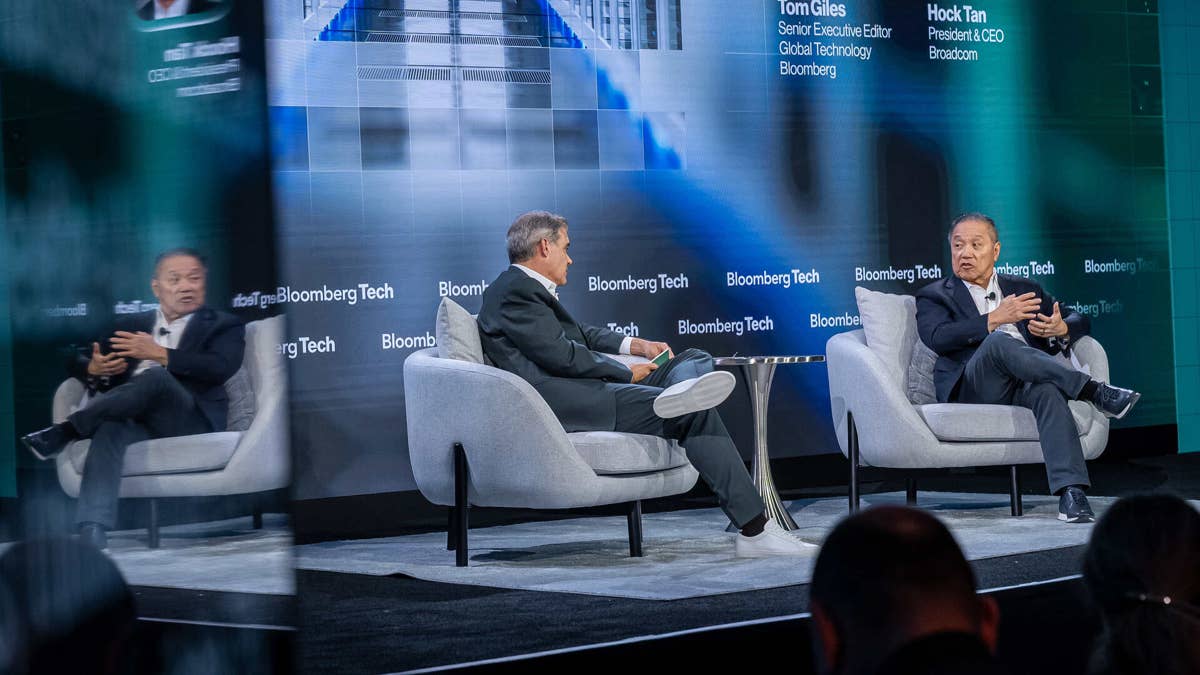
If AI semiconductor revenue continues the trajectory CEO Hock Tan described last quarter — over 200% year-over-year growth heading into Q3 — the forward P/E of 19.27 times will look cheap in retrospect, and Engel's Hold call will look premature.
If execution slips or hyperscaler spending shows any signs of moderation, a trailing P/E near 60 times leaves very little cushion. That's the honest tension in this stock right now. And one downgrade from one analyst, however well-timed, doesn't resolve it either way.
Related: JPMorgan's latest Broadcom outlook sends key signal