Is Macy’s dividend safe after massive store closures?
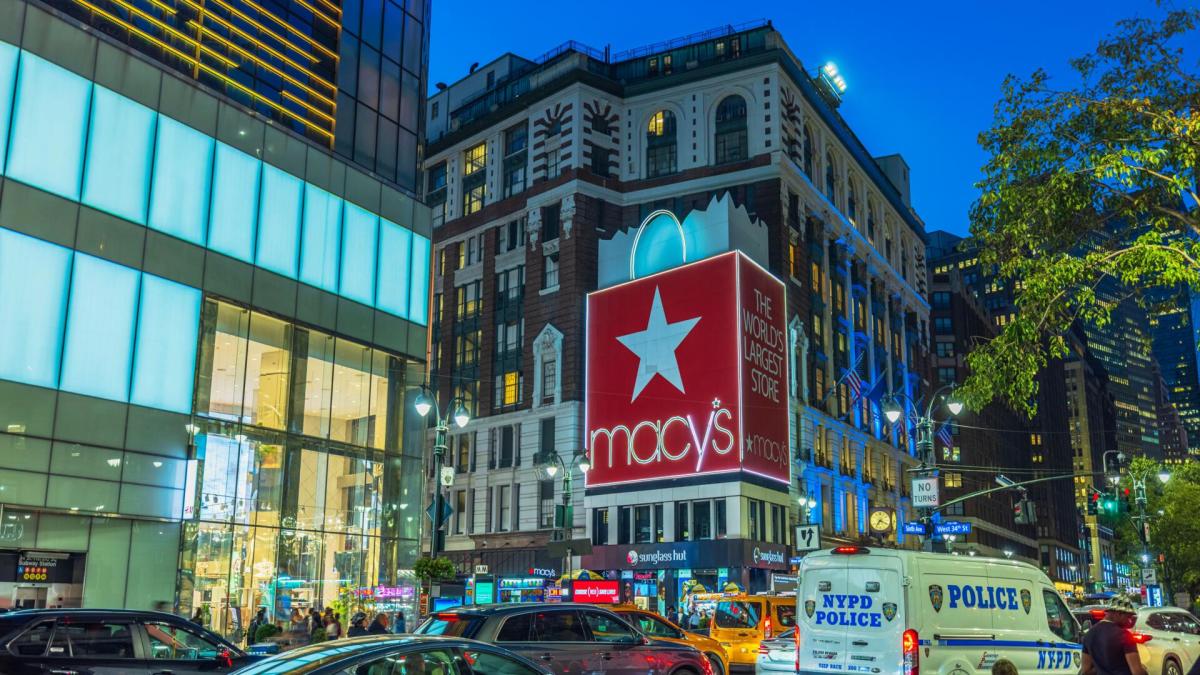
Macy's is accelerating its store-closure strategy, with most of the 14 closures expected to occur in the first quarter of 2026. Let’s see how these closures could impact the iconic retailer's dividend payout in the near term.
Notably, Macy’s (M) had closed 66 stores in 2025 and 55 in 2024. When the dust settles, the company will have eliminated roughly 120 locations since CEO Tony Spring unveiled his "Bold New Chapter" turnaround plan two years back.
According to an internal memo reviewed by WWD, Spring told employees that the company is reviewing its portfolio and will decide where to invest, with a focus on streamlining operations.
The memo promised support for affected workers, including transfer opportunities where available, as well as severance and outplacement services for those who can't relocate.
Getty Images Alexander Shapovalov
Is Macy’s dividend safe in 2026?
Given a quarterly dividend payout of $0.182 per share, Macy’s offers shareholders a trailing yield of 3.3%.
- Analysts tracking the dividend stock forecast Macy’s free cash flow to improve from $396 million in fiscal 2025 (ended in January) to $757 million in fiscal 2027.
- This indicates Macy’s payout ratio is expected to improve from 51% to below 30% over this period.
- An improving payout ratio will help Macy’s strengthen its balance sheet and, if consumer spending improves, raise dividends.
In fact, Wall Street expects the annual dividend payment to increase to $1.11 per share by fiscal 2030, which would expand the yield-at-cost to over 5%.
Why these closures matter more than previous ones
Store closures have become routine in retail over the past decade, but this round feels different.
Macy's has consistently returned cash to shareholders through dividends over the past several years, paying out roughly $50 million quarterly.
More Dividend Stocks:
- Tim Cook quietly hands Apple investors a surprise pay raise
- Cathie Wood owns a $239 million stake in this dividend stock
- 147-year-old oil giant just raised dividend 4% in 2026
Year-to-date through the most recent earnings call, Macy's has returned $150 million to shareholders through its dividend program.
But aggressive restructuring often forces companies to make tough choices about capital allocation, and dividends are frequently cut when businesses need to preserve cash for reinvestment.
The company is executing a massive transformation that requires significant capital investment in its "Reimagine" stores, while maintaining its commitment to shareholders who have held the stock through a difficult retail environment.
The 'Bold New Chapter' is showing some life
Spring's Bold New Chapter turnaround strategy isn't just about closing stores.
The plan includes opening 15 new Bloomingdale's locations and 30 Bluemercury stores, the specialty beauty chain that competes directly with Ulta and Sephora.
Related: Macy’s signals trouble with unexpected closures
It also covers enterprise-wide operational improvements and supply chain modernization, including a new state-of-the-art distribution center in China Grove, North Carolina.
But the heart of the strategy focuses on fixing Macy's flagship nameplate, which had been bleeding sales. According to this Forbes report, comparable sales dropped 3.3% in fiscal 2022 and fell another 6.6% in fiscal 2023.
Macy's identified 350 stores as "go-forward" locations after deciding which 150 to close. From that group, it selected a subset of stores to serve as transformation pilots.
The company originally planned to remake 50 locations but has since expanded that to 125 stores.
The early results look promising. In the third quarter ended November 1, the Reimagine stores reported a 2.7% increase in comparable sales. The entire fleet of go-forward locations saw 2.3% comp sales growth.
Those numbers represent Macy's best quarterly performance in 13 quarters and mark the second consecutive quarter of positive comparable sales growth.
Numbers that tell the real story
The third quarter beat expectations across the board.
- Macy's delivered adjusted earnings per share of $0.09, well above the guidance range of a loss between $0.15 to $0.20.
- Net sales came in at $4.7 billion, and adjusted EBITDA hit 5.8% of total revenue.
- The positive momentum prompted Macy's to raise its full-year guidance.
- Net sales are now expected to reach $21.5 billion to $21.6 billion, up from $21.2 billion at the low end of previous guidance.
- Adjusted EBITDA as a percent of revenue will range between 7.8% to 8.0%, while adjusted diluted earnings per share should land between $2.00 and $2.20.
Those improvements came despite significant headwinds from tariffs, which the company estimates will impact gross margin by 40 to 50 basis points for the full year, equivalent to roughly $0.25 to $0.35 of earnings per share.
COO and CFO Tom Edwards said the company has effectively mitigated tariff impacts through shared cost negotiations, vendor discounts, and strategic pricing adjustments.
Edwards stated:
Still, tariffs remain a drag on profitability that could intensify if trade tensions escalate.
What investors should watch?
The dividend question looms large for Macy's shareholders.
Macy’s has maintained its quarterly dividend payments throughout the restructuring, but the pace of store closures and required investments in transformation creates natural tension with capital allocation priorities.
Macy's ended the third quarter with $447 million in cash on the balance sheet, up from $315 million a year earlier. Notably, it has no debt maturities until 2030, providing financial flexibility.
But flexibility only goes so far when you're simultaneously closing stores, investing in new concepts, and trying to transform your remaining fleet.
Spring's transformation plan is performing well on operational metrics. Traffic is positive, average unit retail continues increasing, and Net Promoter Scores are hitting record highs. The Reimagine stores are proving the concept works.
The question is whether Macy's can execute the transformation quickly enough to maintain its dividend commitment while reinvesting for growth. Based on the current trajectory, it looks quite certain.
Related: Macy's is selling an $80 comforter set for $24