National mall footwear giant closes 82 stores as shoppers trade up
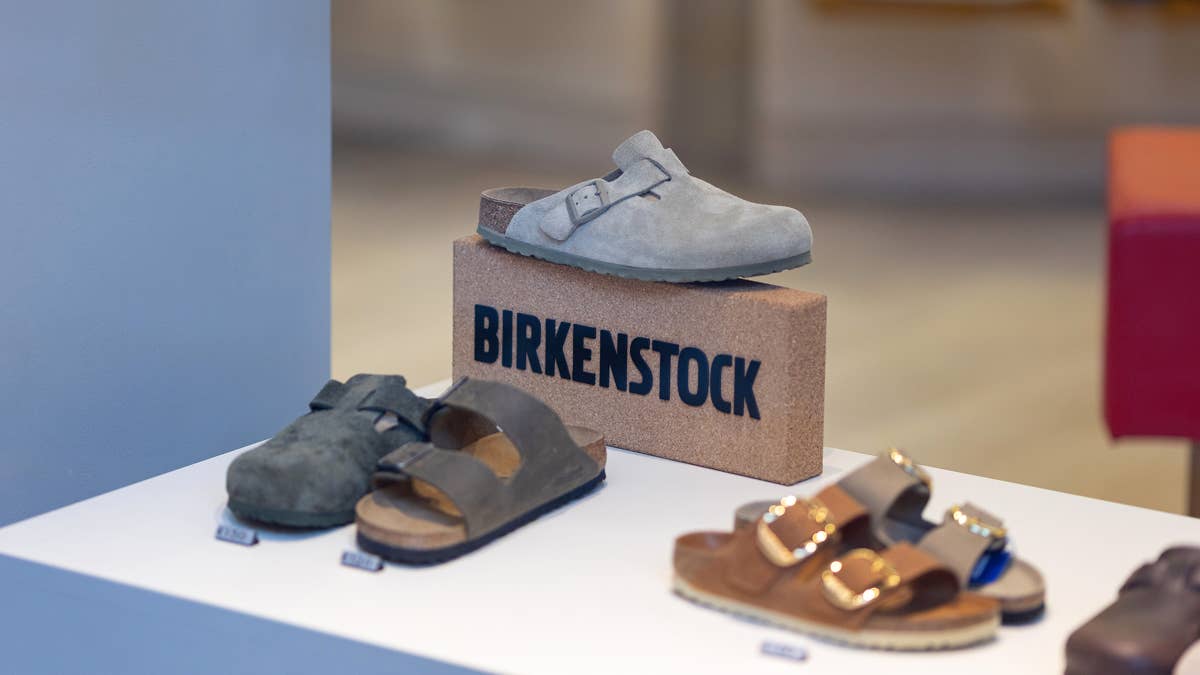
If you think inflation means stores are dropping prices to win consumers back, think again. One of America's historic footwear giant is actually betting on higher-priced products, and closing stores at your local malls.
The way we buy shoes has radically transformed. Stiff dress shoes have been replaced by versatile comfort, according to the US Men’s and Women’s Footwear Market Report. But keeping up with changing fashion trends is no longer the hardest part of the game.
Today, legacy retailers face intense pressure from tariffs, inflation, and shifting consumer preferences. As McKinsey and Company’s The State of Fashion 2026 report notes, new US tariffs have completely "redrawn trade maps," forcing brands to rapidly reconstruct supply chains on the fly.
Americans spent $121 billion on footwear last year, importing six pairs of shoes per person, according to the FDRA. Yet one of the country's biggest shoe retailers, Caleres, the powerhouse behind Famous Footwear, Sam Edelman, and Stuart Weitzman, says its affordable business is slowing while demand for premium brands surges.
Inflation-pressured consumers are dropping mall impulse buys to prioritize personal well-being, health, and longevity, according to McKinsey. This shift is prompting many footwear retailers to rethink both store fleets and product strategies.
I recently reported about Genesco (the powerhouse behind Journeys) quietly shuttering 202 stores between 2023 and mid-2026. Then, there’s Freebird’s pull back, Foot Locker, which closed hundreds of Champs locations, and JD Sports that announced the structural winding down of 175 Hibbett stores.
Now, Caleres has joined the list, aggressively adapting to shifting consumer behavior.
Caleres closed 82 stores over the last four years
A global footwear powerhouse with a diverse portfolio of popular brands, Caleres, recently reported its first quarter earnings results, revealing a net sales increase of 8.5% year-over-year reaching $666.6 million.
Importantly, while the premium brand portfolio saw net sales increase 20.6% year-over-year, the company’s more affordable segment Famous Footwear experienced a net sales decline of 2.5%.
During the quarter, the company closed 10 Famous Footwear store locations and opened one, ending the quarter with 812 stores.
At the end of 2021, Famous Footwear segment operated 894 stores, according to the company’s Form 10-K filing with the Securities and Exchange Commission. This means that Caleres has closed 82 stores over the period of four years and three months, averaging around 19 store closures per year.
Why has Caleres been closing stores?
Looking at the company’s raw earnings numbers, it can be observed that while the company’s brand sales have grown significantly, its Famous Footwear net sales have been declining, including Famous Footwear comparable sales.
Caleres explicitly noted that its luxury and premium brands segments, such as Stuart Weitzman and Sam Edelman are seeing strong growth, while a more affordable chain is struggling due to accelerated inflation squeezing everyday consumers.
“While we saw improving trends leading into Easter, we believe accelerated inflation put pressure on consumer traffic and sales, especially as we moved into April," said President and Chief Executive Officer of Caleres, John Schmidt, during the earnings call.
However, it is important to note that while Caleres plans another five store closures this fiscal year, it also plans to open another 12 stores, which would then result in a net decline of only 3 stores for the year. So, what’s behind this closing and opening strategy?
Caleres bets on premium products
To offset the decline in the affordable segment, Caleres is now doubling down on its “elevate-and-edit strategy,” which has seen powerful growth.
The so-called elevate-and-edit strategy is Famous Footwear’s initiative to increase the assortment and sales of premium, trend-forward brands and products, shifting away from lower-margin value categories — a strategy that appears to be working out.
“Our Elevate-and-Edit strategy continues to resonate with our Famous consumers. Sales of Elevated products increased nearly 50% in the quarter and penetration reached almost 20% year-over-year. We saw growth in the quarter from Jordan, Skechers, Birkenstock, New Balance, Reef and Brooks, while several brands in the Caleres portfolio finished among Famous' top 15 best-selling brands,” added Schmidt.
The brands most consumers don’t know Caleres owns
Caleres, founded 148 years ago, is the powerhouse behind several popular brands. In fact, “brands are a major strategic lever for Caleres,” writes Umbrex. Why? Because the company’s greatest power is not only in selling shoes, but in offering consumer-facing footwear brands across various prices and uses.
Caleres’ key brands:
- Famous Footwear: A top casual and athletic brand for the whole family, built around convenience, value, and repeat shopping.
- Sam Edelman: One of Caleres’s most important fashion brands, providing accessible luxury women’s footwear with trendy appeal.
- Allen Edmonds: A heritage premium men’s brand known for high quality, handcrafted American shoes for men.
- Stuart Weitzman: The global luxury brand featuring artisanal craftsmanship with precise engineering.
- Naturalizer: A women’s footwear brand with a long heritage and a positioning that blends comfort and style.
- Vionic: A comfort and wellness-oriented brand with appeal to consumers who prioritize support and everyday wear.
- Blowfish Malibu: A more casual and value-oriented brand, especially relevant in everyday women’s footwear.
- Dr. Scholl’s Shoes and LifeStride. Brands associated with comfort, casual wear, and practical everyday footwear.
Sources: Caleres, Umbrex
Related: Iconic mall chain you grew up visiting just closed another 30 stores
What Caleres’ new strategy means for the company and consumers
Retail analysts increasingly view store closures as a way to improve profitability rather than a sign of imminent trouble. Research from Placer.ai notes that chains often reduce locations when they can reach the same customers more efficiently through a smaller footprint and digital channels.
Neil Saunders, Managing Director and Retail Analyst at GlobalData Retail, has repeatedly argued that store closures are often optimization rather than collapse.
"Store closures are not all that unusual" and are not necessarily evidence of a "retail apocalypse,” Saunders said.
For consumers, the more significant shift may not be the store closures themselves, but Caleres' growing focus on premium footwear.
The company is increasingly emphasizing premium brands and higher-priced products, including Jordan, Birkenstock, Brooks, New Balance, and Skechers. At the same time, management expects Famous Footwear sales and comparable sales to decline this year even as its premium brand portfolio continues to grow.
As a result, consumers could see:
- More shelf space devoted to premium footwear.
- Continued closure of underperforming locations as the company refines its store fleet.
- Greater investment in online and direct-to-consumer shopping.
- Less emphasis on lower-priced categories as management pursues higher-margin products.
Related: Women's fashion chain closing its fitting rooms