Oppenheimer sends clear message on Broadcom ahead of earnings
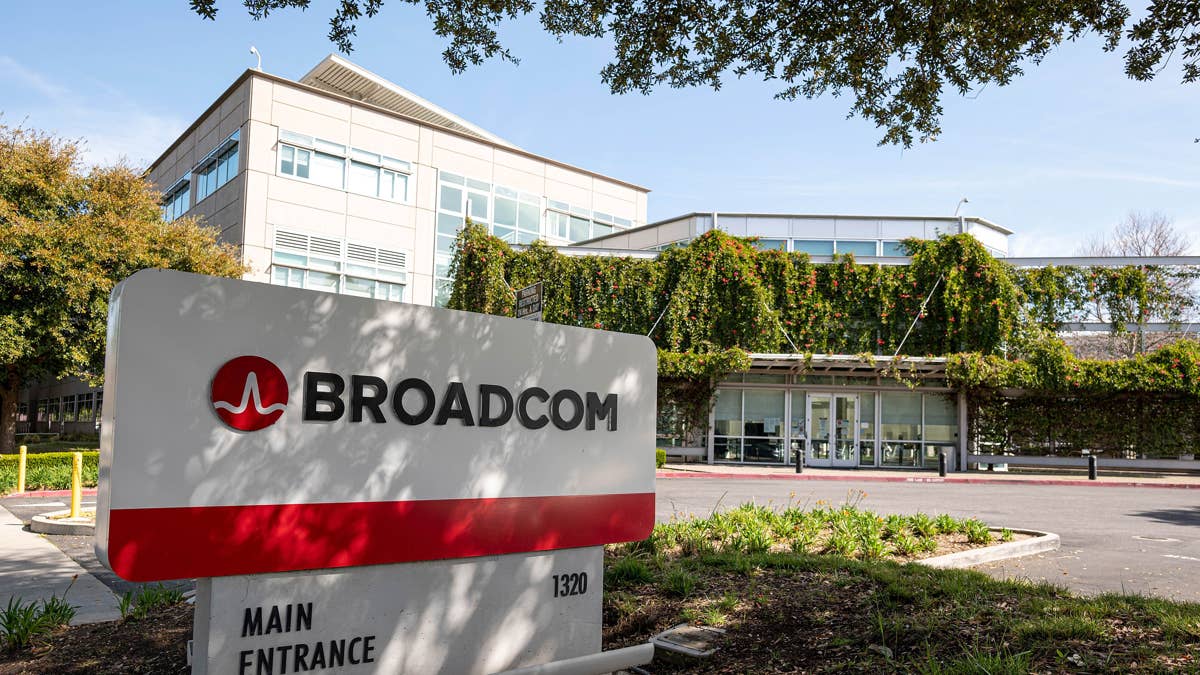
Broadcom reports fiscal second-quarter earnings on June 3. The bar is high. The stock is up 80% over the past year and trades at 37 times forward earnings.
One of the most respected semiconductor analysts on Wall Street just looked at all of that and said the company is likely to clear it anyway.
His reasoning is specific, and it goes beyond the headline revenue number.
Oppenheimer reiterates Broadcom buy rating ahead of June 3 report
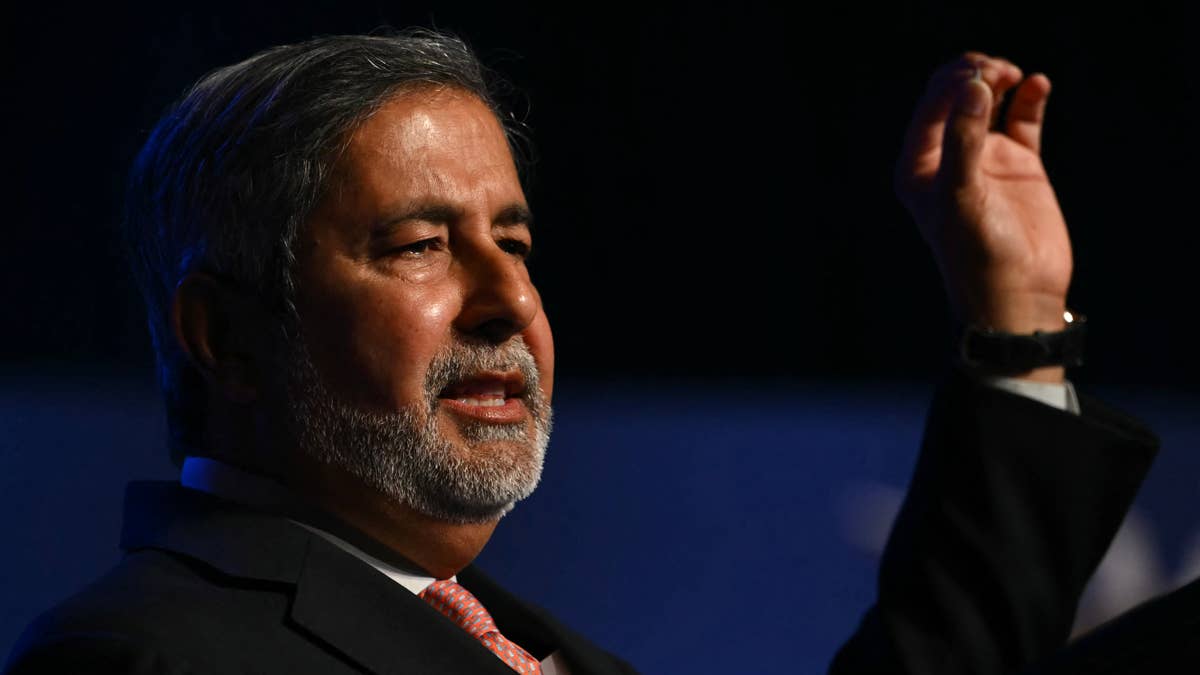
Oppenheimer analyst Rick Schafer, a top-100 Wall Street analyst with a 70.74% success rate and 26.8% average return, reiterated his Broadcom (AVGO) buy rating and $450 price target on May 29 ahead of the company's fiscal Q2 earnings report, according to TipRanks.
"We see upside F2Q results and F3Q outlook led by AI," Schafer said in the note. The call positions him squarely in the beat-and-raise camp: Broadcom will not just meet expectations for the quarter, Schafer believes, but will also raise guidance for the July quarter.
More Wall Street:
- JPMorgan resets S&P 500 price target for the rest of 2026
- Vanguard challenges the S&P 500 as a one-stop strategy
- Goldman Sachs resets Broadcom stock forecast
That is a meaningful statement, given where expectations currently sit. Consensus estimates call for Q2 revenue of $22.12 billion and GAAP EPS of $1.73.
Schafer expects Broadcom to beat both numbers and signal that AI momentum is carrying into the second half of the fiscal year, according to Seeking Alpha.
What Broadcom's AI business looks like heading into earnings report
Broadcom's Q1 2026 results gave Schafer a strong foundation for his argument. The company posted record revenue of $19.31 billion in Q1, up 29% year over year, driven primarily by custom AI semiconductor demand, according to 24/7 Wall St.
For Q2, the company itself guided for AI chip revenue of $10.7 billion. Schafer believes that number will be exceeded by approximately 30% quarter-over-quarter growth in the AI segment. That would put AI revenue closer to $11.5 billion for the quarter.
CEO Hock Tan has reiterated visibility toward AI chip revenue "in excess of $100 billion" by 2027, with supply capacity locked in through 2028. That multi-year visibility is a core part of why analysts like Schafer remain constructive even at current valuation levels, 24/7 Wall St confirmed.
Morris/Getty Images
Why custom chip business is key variable heading into earnings
Broadcom does not compete with Nvidia for GPU sales. It competes in a different and arguably more defensible part of the AI infrastructure stack: custom application-specific integrated circuits designed for specific workloads at specific hyperscalers.
Alphabet, Meta, and other large cloud providers have each commissioned Broadcom to design chips tailored to their own AI systems. Those relationships are sticky because the design process takes years and the switching costs are enormous. Once a hyperscaler builds a data center around a Broadcom custom chip, it does not switch casually.
Schafer's note points to the custom ASIC segment and networking products as the primary drivers of the expected Q2 beat. Both benefit from the same hyperscaler AI buildout that has been driving the industry for the past two years, and neither shows signs of slowing, according to Seeking Alpha.
Key figures heading into Broadcom's June 3 earnings report:
- Oppenheimer call: Rick Schafer reiterated buy rating and $450 price target on May 29; expects beat-and-raise on both Q2 results and Q3 outlook led by AI, according to TipRanks.
- Q2 consensus: Revenue $22.12 billion; GAAP EPS $1.73; AI segment guided at $10.7 billion; Schafer expects 30% quarter-over-quarter AI growth, according to Seeking Alpha.
- Q1 2026 results: Record $19.31 billion revenue, up 29% year over year; adjusted EBITDA margin hit a record 68%; free cash flow at 41% of revenue; $10 billion buyback authorized through Dec. 31, 2026, according to 24/7 Wall St.
- 2027 AI target: CEO Hock Tan reiterated "in excess of $100 billion" in AI chip revenue by 2027; supply capacity locked through 2028, 24/7 Wall St. confirmed.
- Stock performance: Broadcom up 22% year to date and 80% over the past year; trading at $421-$448; forward P/E of 37; 46 analysts covering the stock with consensus strong buy and average target of $480.49, 24/7 Wall St. noted.
- Peer targets:UBS raised to $490; Citi raised to $500, named top semiconductor pick for 2026; Goldman Sachs raised to $500; Evercore holds Street-high at $582, according to TipRanks.
- Prior TheStreet coverage: Citi analyst Atif Malik designated Broadcom as his top semiconductor pick for 2026 in May.
What the risk looks like at current valuations
The counterargument to Schafer's optimism is embedded in the numbers he is working with. Broadcom trades at 37 times forward earnings and 82 times trailing earnings.
Insider selling has been significant. CEO Hock Tan sold 22,000 shares in April, and insiders collectively disposed of more than $356 million in stock over the past three months, according to 24/7 Wall St.
At that valuation, there is no margin for error. A Q2 miss, a cautious Q3 guide, or any signal that hyperscaler AI capex is moderating could produce a sharp correction in a stock that has priced in near-perfect execution.
Schafer is betting the execution will continue to be near-perfect. The June 3 report will determine how well that bet aged.
Related: Citi names Broadcom stock top semiconductor pick for 2026