These 49 Pizza Hut locations silently closed nationwide
As more consumers forgo crusty, delicious pizza made from fresh dough and baked in special ovens, pizza chains are having a hard time surviving.
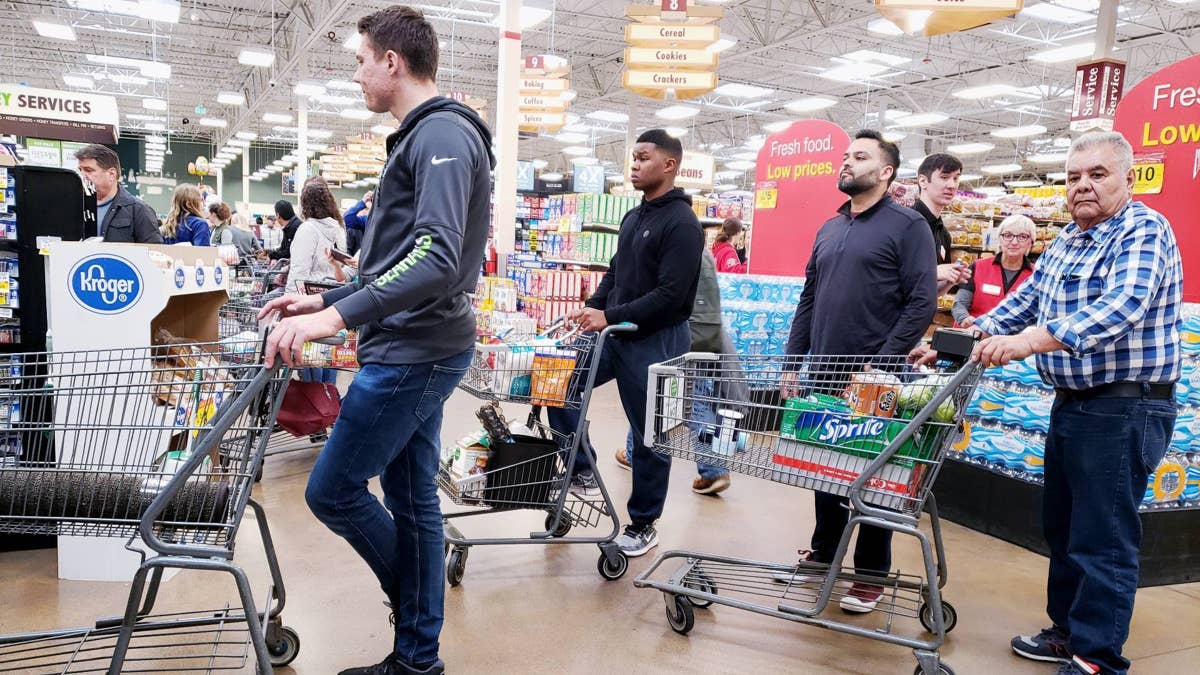
However, consumers are not to be blamed, as they also face heavy economic pressures. In fact, industry data show that many consumers are forced to trade down their typical dining-out options for more modest meals at home. A quarter of consumers say they eat more frozen pizza than restaurant pizza due to price increases, according to Baking Business.
More than two-thirds (68%) of U.S. consumers are cutting back on restaurant dining generally in 2026, prioritizing affordability and convenience, reveals Popmenu’s 2026 report Restaurant Trends To Watch.
Consumers are spending $25 less per week on food away from home, according to Popmenu, while restaurants and pizza chains continue to deal with rising food, labor, and rent expenses. These trade-downs pressure restaurants, which operate with much lower profit margins, eventually leading to store closures or even bankruptcies.
In 2025, a staggering 42% of restaurant operators reported their businesses were not profitable, the National Restaurant Association notes. Pizza chains also seem to face the special challenge of a consumer protein-craze trend.
Major pizza chains are shrinking, such as Papa John's, which is closing 300 stores, according to Restaurant Dive. Others, such as MOD, Little Caesars, North County, CPK, and Crust, face bankruptcies or reorganizations.
Pizza Hut’s closure of 250 restaurants wasn’t surprising
In recent years, the second-largest pizza company in the world, Pizza Hut, joined the group of struggling pizza chains.
For the first quarter of the year, its global same-store sales remained flat, while international sales grew 2%, according to a Yum! Brands earnings release. On the other hand, Taco Bell’s U.S. same-store sales grew 8% year over year in the same quarter, beating a 5.6% consensus.
In March 2026, Pizza Hut's same-store visits were down 0.4%, according to Placer.ai. The restaurant chain’s struggles, however, started earlier.
Related: Papa Johns sees three alarming shifts in customer behavior
Three months ago, during its Q4 earnings call, Yum! Brands confirmed the closure of 250 underperforming restaurant locations under its Hut Forward plan.
“In the first half, in the U.S., we expect approximately 250 targeted closures of underperforming units tied to the HUD forward program, which will result in a decline in global Pizza Hut units in the first half,” the company’s Chief Financial Officer Ranjith Roy said, according to a transcript shared by The Motley Fool.
When asked during the call if the number of closures could further grow, Roy neither confirmed nor denied, responding: “The 250 stores that we mentioned is a very small portion of the 20,000-unit estate that Pizza Hut has globally. And it is the right answer for the brand as we move through the strategic review.”
The news about closures wasn't too surprising, since Yum! Brands previously reported in its third-quarter earnings call that Taco Bell and KFC account for about 90% of its operating profits. “They are the ones that drive the bulk of our growth, and they will continue on the trajectory that they’re on now,” Roy said, Insider Monkey noted.
“That essentially makes Pizza Hut a drag on Yum Brands that may not be worth management’s time,” TheStreet Co-Editor-in-Chief Daniel Kline suggested.
To address the numbers, the company started a strategic review of Pizza Hut, which could lead to a sale.
“The intent is for Pizza Hut to reach its full potential for the benefit of its franchisees, consumers, and employees, and to maximize value for Yum! shareholders. The review will explore a range of strategic options while Pizza Hut continues to focus on near-term business imperatives,” the company shared in a press release.
With the Hut Forward initiative, Yum! Brands aims to refresh Pizza Hut’s marketing strategy, enhance marketing, modernize certain technology and improve operational efficiency by also closing underperforming locations.
Pizza Hut stores have been closing one by one
Yum! Brands has not publicly disclosed the locations scheduled for closure, but a company spokesperson recently confirmed to Fast Company that it is still on track to shutter about 250 locations.
Stores have been silently vanishing from towns and cities across the country, with the company making no announcements before or after the closures.
Related: Another seafood chain closes restaurants exits market
According to research by Fast Company, which includes Yelp and Google Reviews, as well as Pizza Hut’s own store locator tool, the states most affected by the closures include California, Pennsylvania, and Ohio.
In fact, the data suggest that nearly 50 U.S. Pizza Hut restaurants have closed over the last few months.
The pizza chain is still growing globally, however. In 2025, it added 1,184 locations across 65 countries. And of its 19,974 locations globally, 68% are outside the U.S., according to the company’s 10-K filing with the Securities and Exchange Commission (SEC).
More than 99% of the stores in Yum’s Pizza Hut Division are operated by franchisees.
Pizza Hut’s 49 locations closed:
Arizona
- 6671 E. Baseline Rd. Studio # 121, Mesa, AZ 85206
- 420 E. Bell Rd. Ste. C101, Phoenix, AZ 85022
California
- 4558 Atlantic Ave., Long Beach, CA 90807
- 6911 Linda Vista Rd., San Diego, CA 92111
- 20377 Avalon Blvd., Carson, CA 90746
- 9118 Alondra Blvd., Bellflower, CA 90706
- 7253 Boulder Ave a-6, Highland, CA 92346
- 12003 Beach Blvd., Stanton, CA 90680
- 1758 S. Nogales St., Rowland Heights, CA 91748
- 19725 Yorba Linda Blvd., Yorba Linda, CA 92886
- 112 N. Euclid St., Fullerton, CA 92832
- 11115 Crenshaw Blvd., Inglewood, CA 90303
- 366 N. Harbor Blvd., La Habra, CA 90631
- 11550 Whittier Blvd., Whittier, CA 90601
- 9111 Imperial Hwy., Downey, CA 90242
- 7779 Garvey Ave., Rosemead, CA 91770
Florida
- 1616 S. Dixie Fwy., New Smyrna Beach, FL 32168
Iowa
- 1211 Silent Prairie Rd., Le Mars, IA 51031
Indiana
- 4264 N. Cypress Ln., Bloomington, IN 47404
Oklahoma
- 413 S. Green Ave., Purcell, OK 73080
Ohio
- 5840 Darrow Rd., Hudson, OH 44236
- 4118 OH-43, Kent, OH 44240
- 1715 OH-59, Kent, OH 44240
- 1208 Tiffin Ave., Findlay, OH 45840
Oregon
- 244 S. Main St., Dallas, OR 97338
Pennsylvania
- 900 N. Hanover St., Elizabethtown, PA 17022
- 145 Sheraton Dr., New Cumberland, PA 17070
- 101 Cavasina Dr., Canonsburg, PA 15317
Kansas
- 1001 E. 7th St., Galena, KS 66739
- S 69 Hwy. Columbus, KS 66725
Kentucky
- 597 S L Rogers Wells Blvd., Glasgow, KY 42141
- 4507 N. Mayo Trail, Pikeville, KY 41501
Louisiana
- 1821 W. Pinhook Rd., Lafayette, LA 70508
Michigan
- 9728 Red Arrow Hwy., Bridgman, MI 49106
Missouri
- 9245 Gravois Rd., Affton, MO 63123
Minnesota
- 105 S. Oak Ave., Owatonna, MN 55060
- 1310 MN-15 #102, Hutchinson, MN 55350
Montana
- 401 Park Ave., Anaconda, MT 59711
- 800 N. Idaho St., Dillon, MT 59725
Nebraska
- 2662 Cornhusker Hwy. Ste 2B, Lincoln, NE 68521
North Carolina
- 960 W. Main St., Rockwell, NC 28138
Texas
- 1300 S. Cage Blvd. Suite 15, Pharr, TX 78577
- 2113 Andrews Hwy., Odessa, TX 79761
South Carolina
- 6432 Two Notch Rd Ste. S, Columbia, SC 29223
South Dakota
- 101 N. Splitrock Blvd., Brandon, SD 57005
Virginia
- 1001 Leatherwood Ln., Bluefield, VA 24605
Washington
- 304 S 1st St., Selah, WA 98942
- 421 Roosevelt Ave., Enumclaw, WA 98022
- 5160 Borgen Blvd. Suite B, Gig Harbor, WA 98332
West Virginia
- 218 Park Dr. Suite G, Weirton, WV 26062
Wisconsin
- 2727 S. Business Dr. #462, Sheboygan, WI 53081
Source: Fast Company
Related: McDonald’s has a new warning for all of its customers