Economy
07-07-2026 14:23
7 Views
USDT Loses EU Exchange Access as Tether Skips MiCA…
Why Has USDT Been Removed From Regulated EU Exchanges?
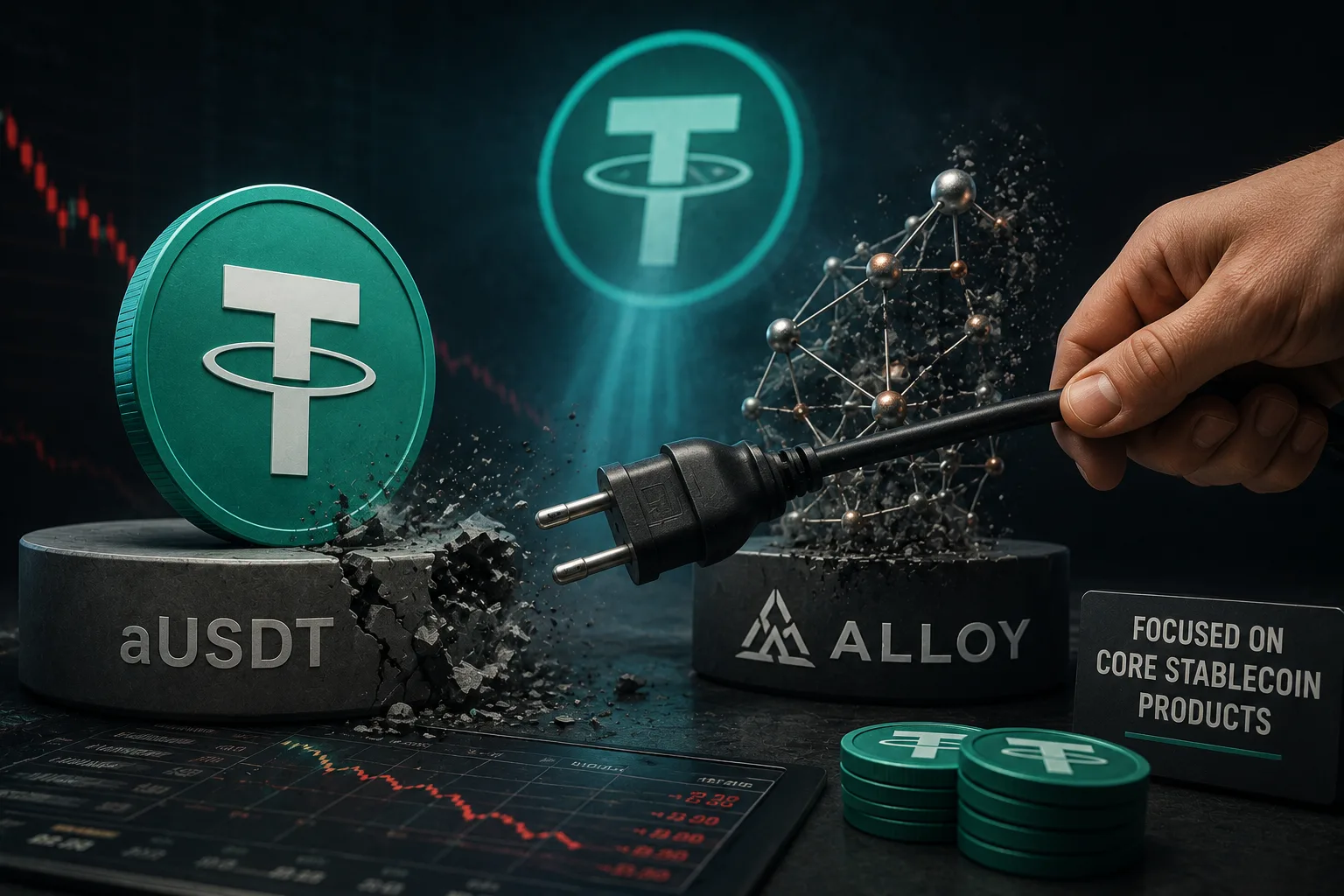
Tether’s USDT has lost access to regulated crypto exchange order books in the European Union after the Markets in Crypto-Assets framework completed its transition period on 1 July 2026.
The change removes the world’s largest stablecoin by market capitalisation from licensed trading platforms across the bloc after Tether chose not to seek authorisation under MiCA. Platforms operating under the EU regime, including Coinbase, Kraken, and Crypto.com, have withdrawn USDT trading for European users, ending the token’s regulated exchange presence in one of the world’s most closely supervised crypto markets.
The decision marks a clear split between global stablecoin scale and regional regulatory access. USDT remains the largest stablecoin globally, with a market capitalisation of about USD 186 billion. But in the EU, market size is no longer enough to secure listing access on regulated venues. Issuers must fit into MiCA’s electronic money token framework, and Tether’s reserve model does not align with the rules as written.
Under MiCA, stablecoin issuers seeking recognition as electronic money tokens must hold at least 60% of reserves in European bank deposits. Tether did not apply for this status. A company official has previously said the requirement creates systemic risk because Tether relies mainly on US Treasury securities and other globally diversified assets rather than European bank holdings.
How Did The Market Prepare For The Deadline?
USDT’s exit from regulated EU platforms did not happen suddenly. Tether had already begun reducing its European exposure before the July 2026 deadline. The company discontinued its euro-pegged EURT stablecoin in 2024, while exchange support for USDT declined over the following months.
Coinbase Europe delisted USDT in December 2024. Crypto.com followed in January 2025. Binance restricted European USDT trading pairs in March 2025, while Kraken moved users to a sell-only model before ending support entirely. By the time the transition period closed, the regulated exchange market had already moved most of the operational risk away from USDT pairs.
The licensing picture also shows how selective MiCA authorisation has become. Only 244 MiCA licences had been issued across the EU before the July deadline. Some crypto firms have chosen to expand from jurisdictions such as Dubai rather than pursue authorisation under the bloc’s framework.
That choice reflects a broader trade-off for crypto companies. MiCA offers access to a unified European market, but it also imposes reserve, disclosure, governance, and licensing requirements that may not fit every business model. For stablecoin issuers, the reserve requirement is the most important dividing line.
Investor Takeaway
USDT’s EU removal is not a liquidity failure. It is a regulatory access issue. The token remains dominant globally, but MiCA has shifted regulated European trading toward stablecoins that fit the bloc’s electronic money framework.
Why Are USDC And EURC Gaining Ground?
Circle has taken the opposite route. The company secured an Electronic Money Institution licence in France, allowing it to passport services across all 27 EU member states. That approval has allowed USDC and EURC to operate under MiCA and become the main dollar- and euro-backed stablecoins available on licensed European trading platforms.
For exchanges and liquidity providers, the shift is practical. Regulated platforms can no longer offer USDT trading within the EU, so market makers that previously quoted USDT pairs have started rebuilding liquidity around USDC. Over time, that can change spreads, trading depth, collateral preferences, and the stablecoin rails used by European users.
The euro side is also becoming more competitive. EURC now has a clearer regulated path, while 37 banks, including BNP Paribas and ING, are developing a joint euro stablecoin known as Qivalis. The project points to a wider institutional push to create regulated euro-denominated settlement tools as banks increase their digital asset exposure.
This does not mean Tether has fully exited Europe’s digital asset infrastructure. StablR and Oobit have launched MiCA-compliant stablecoins, EURR and USDR, using Tether’s Hadron tokenisation platform. That gives Tether a way to remain involved in technology partnerships without issuing a MiCA-approved stablecoin of its own.
What Are The Market Implications Beyond Europe?
The EU’s approach highlights a larger theme for stablecoin markets: regulation is becoming regional, while liquidity remains global. USDT can lose access to regulated European exchanges and still remain the largest stablecoin worldwide. But the loss of regulated EU order books changes how European users, exchanges, and institutions interact with dollar liquidity.
For institutional adoption, the shift may favour stablecoins with clearer licensing status. Asset managers, banks, and regulated brokers are more likely to use tokens that can be offered through authorised platforms without legal uncertainty. That gives USDC and EURC a stronger position in Europe, even if USDT remains the preferred stablecoin in other markets.
Outside the EU, demand patterns are moving differently. Bybit and OKX have reported higher Bitcoin holdings among users alongside declining USDT balances in recent Proof of Reserves disclosures. In India, the USDT premium rose above 8.5% after enforcement action against crypto remittance firms, showing that local regulation can increase rather than reduce demand for the token in certain markets.
The result is a fragmented stablecoin landscape. In Europe, MiCA is pushing liquidity toward authorised issuers and bank-aligned models. In other jurisdictions, USDT remains deeply embedded in offshore trading, remittances, and dollar access. For investors and exchanges, the key issue is no longer only stablecoin size. It is where each token can be used, under which rules, and with what level of regulatory certainty.