

After bankruptcy, Hooters closes more restaurants
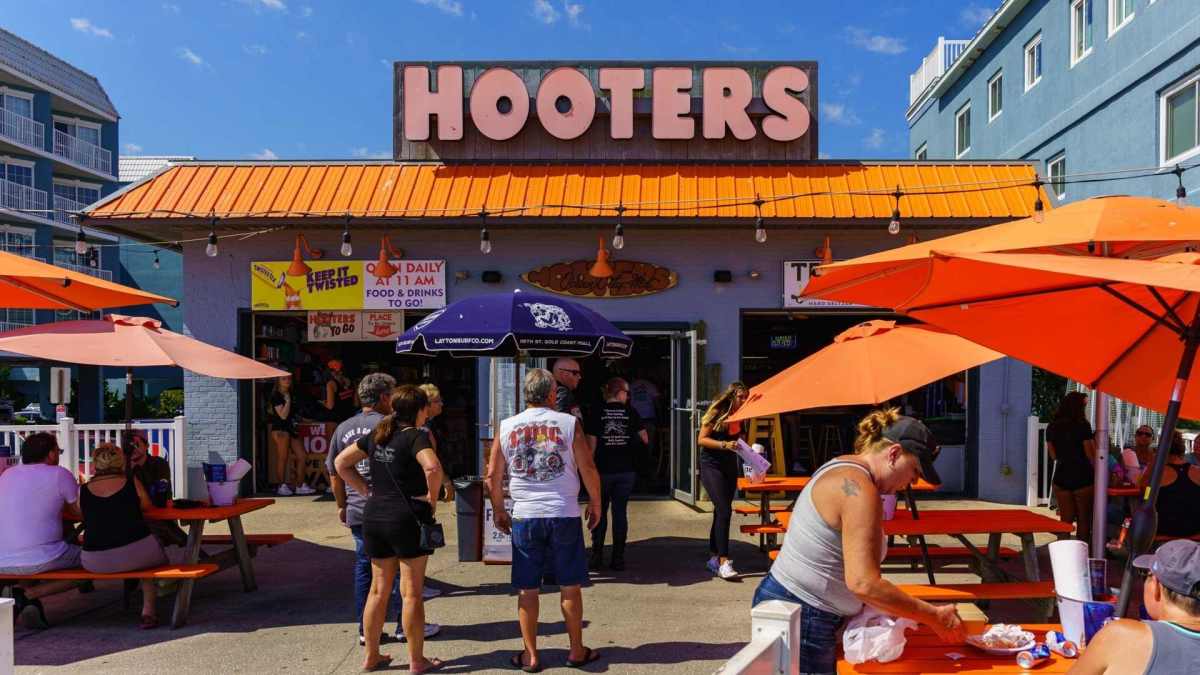
Bankruptcy might buy a company more breathing room financially, but it does not fix any underlying problems. That's why it's fairly common for companies to file for Chapter 11, reorganize their business, and then continue to struggle.
"Operating deterioration is ultimately what causes a capital structure to become inappropriate or unsustainable. Rightsizing a balance sheet is certainly a very high priority in bankruptcy, but is not itself a remedy,” Robert J. Duffy, global segment leader of corporate financing and restructuring at FTI Consulting, shared with Financier Worldwide.
Fixing your debt buys breathing room, but it does not solve the underlying issues that led to bankruptcy. That's at least partially why Hooters, a company that survived a March 2025 Chapter 11 bankruptcy, continues to close restaurants after it emerged from that bankruptcy.
Hooters may have a business model problem
Hooters pioneered what has been casually referred to as the "breasaurant" model. It uses busty waitresses in low-cut tops and short shorts to serve wings, burgers, and more.
The chain faced all of the issues that have challenged the restaurant industry.
"Hooters, like other casual dining restaurants, has struggled in recent years due to inflation, the high costs of labor and food, and declining spending by cash-strapped American consumers," CNBC reported.
It also faced challenges from having a business model that may have become dated. The chain's original owners, who bought the chain back as part of its Chapter 11 bankruptcy process, actually envisioned the chain as family-friendly.
Neil Kiefer, CEO of the founder-owned unit, HMC Hospitality Group, explained to Bloomberg how the chain lost its way.
"What hurt the brand, as the founders see it, were decisions by its private equity overlords that took it away from its roots as a beachy destination offering good food and good service that was also family-friendly. Helping crystallize that view: a 2021 decision by Hooters of America to introduce new waitress uniforms that looked more like underwear than the retro jogging shorts the original Hooters referenced, along with theme nights where servers wore only bikinis," the news site shared.
To fix the brand, the former and now current owners planned a return to its PG-13 roots.
“You go to some parts of the country, and people say, ‘Oh, I could never go to Hooters, my wife would kill me,”’ Kiefer said. “That’s depressing to us. We want to change that.”
Shutterstock
Hooters Chapter 11 history:
- Filing for Chapter 11 (March 31, 2025): Hooters of America LLC, the corporate owner of the restaurant chain, filed a voluntary petition for Chapter 11 bankruptcy protection on March 31, 2025 in the U.S. Bankruptcy Court for the Northern District of Texas, according to PacerMonitor filings.
- The filing was driven by mounting debt, about $376 million, and the need to restructure its capital and operations while continuing to operate. • Business‑as‑usual during restructuring, reported Reuters.
- Despite the Chapter 11 filing, Hooters continued operating its restaurants during the bankruptcy process. The restructuring plan was designed to sell most or all of the company‑owned restaurants while keeping the overall brand alive rather than liquidating the business, according to Fox.
- Sale to franchisee‑backed group: As part of the plan, Hooters arranged to transfer ownership of its company‑ownedrestaurants (reportedly around 151 locations) to a franchisee‑backed buyer group, which included existing franchise operators and individuals associated with the original founders, Fox added.
- Store closures during restructuring: During the bankruptcy process, the company closed dozens of underperforming company‑owned locations. For example, more than 30 restaurants nationwide were shut mid‑2025 in several states as part of optimization efforts tied to the restructuring, according to The Today Show.
Hooters has continued to close restaurants
After emerging from bankruptcy, Hooters has continued to close restaurants. That's part of a broad effort to right-size the brand, and in some cases, it's a way to escape leases that no longer make sense.
“Hooters is here to stay, and by optimizing our business in support of our long-term goals, Hooters will be well-positioned to continue our iconic legacy under a pure franchise business model,” an HOA spokesperson told Restaurant Dive in an email.
Hooters' new owners are taking the steps every restaurant chain has to take in order to keep the overall brand healthy.
More Restaurants
- Chipotle’s new consumer strategy raises eyebrows
- Burger King revives iconic kids’ meal toys after 22 years
- Walmart surprises shoppers with bold new restaurant offering
"Closing poorly performing units can be better for the chain overall than trying to fix them” because pouring resources into rescuing the those locations can undermine the entire chain,” Maeve Webster, president of consulting firm Menu Matters, told CNN.
“It’s similar to rationalizing a menu: Better to eliminate items that aren’t selling or rarely selling to improve the quality and consistency of what remains,” she added.
Recent Hooters closures:
- Wethersfield, Connecticut (Berlin Turnpike location): Marked the end of Hooters’ presence in Connecticut after 33 years, according to The Hour.
- Farmingdale, New York (Long Island): The last remaining Hooters on Long Island, according to AOL.
- Fresh Meadows, Queens, New York: The final Hooters in New York City, reported Hoodline.
- Mishawaka, Indiana: Effective: March 2026, according to ABC57 News.
- Nationwide closures (2025 restructuring): More than 30 company-owned locations closed across at least 12 states, according to Fast Company.
Related: Taco Bell expands menu to change how you order

